Dongyu Insights
Custom Squishy Toy Sample Approval Checklist for Wholesale Buyers
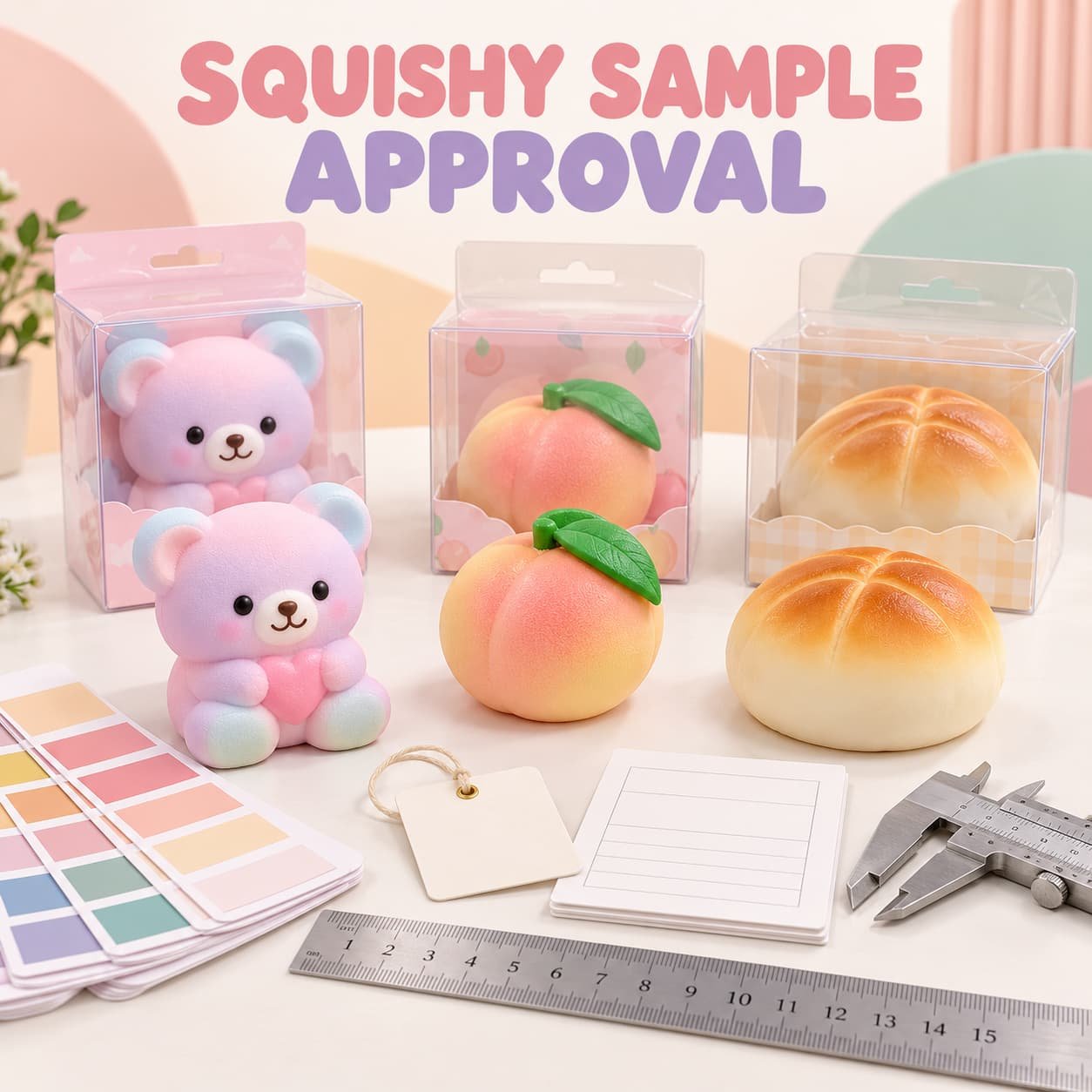
A custom squishy toy sample should do more than show that an idea looks attractive. For a wholesale buyer, the sample must become a controlled reference that connects the approved shape, size, color, tactile feel, surface, decoration, accessories, packaging, and order records before bulk production begins.
This custom squishy toy sample approval checklist explains how importers, retailers, private-label brands, gift companies, and online sellers can review PU foam, TPR/TPE, mochi, slow-rising, and other squeeze-toy samples without turning an informal photo or chat message into the production standard by accident.
First Identify What Type of Sample You Received
Not every sample answers the same question. Before reviewing appearance, ask the supplier to name the sample stage and list what is final, temporary, or still subject to change.
- Reference sample: an existing product used to discuss size, feel, material direction, or packaging possibilities. It may not match the final custom order.
- Shape or prototype sample: used to evaluate proportions, silhouette, thickness, molded detail, and how the product sits or fits the hand.
- Color and decoration sample: used to review pigment, gradient, coating, printed features, logo, and visual alignment on the physical form.
- Packaging sample: used to check bag, box, insert, display tray, label, artwork, barcode area, and product fit.
- Pre-production sample: intended to represent the approved product and package before the order is released to bulk manufacture.
- Production sample: selected from the actual production lot and used to confirm that the manufactured version matches the approved standard.
If a prototype uses temporary color, hand-applied decoration, substitute packaging, or a different attachment, write that down. “Approved” should never hide unresolved items.
Create One Sample Identity Record
Give every reviewed sample a clear identity. Record the buyer SKU, supplier SKU, product name, design or color variant, sample date, revision, quotation version, artwork version, and packaging version. Photograph every side under consistent lighting and include a scale reference where useful.
When multiple samples arrive, do not identify them only as “first one” and “new one.” Use a simple revision sequence and keep comments attached to the relevant version. If a later sample changes only printing, state whether the earlier sample still controls shape and hand feel. If a final sample replaces all previous references, make that explicit.
A practical record should answer:
- Which exact sample is being reviewed?
- Which files and quotation does it relate to?
- Which features are final?
- Which features are temporary or pending?
- Who reviewed it and when?
- What decision was made: approved, rejected, or approved with conditions?
Confirm Shape, Proportions, and Dimensions
Compare the physical sample with the approved artwork or 3D reference from the intended viewing angles. Check the overall silhouette before focusing on small details. A rounded animal, fruit, food shape, product replica, or mascot should remain recognizable when viewed in its retail orientation and after ordinary squeezing.
Measure the defined points rather than writing only one overall size. Depending on the design, this can include maximum width, height, depth, base diameter, thickness through the main body, and the dimensions of important projections. Record the method and units. If a dimension matters to a retail box, display tray, keychain, vending compartment, or fulfillment parcel, identify it as a controlled point.
Review thin ears, stems, tails, fins, toppings, handles, attachment loops, and narrow transitions. They may look accurate but behave differently from the main body during molding, finishing, packaging, or use. The custom squishy toy mold design guide explains why artwork details sometimes need to be simplified or strengthened before final sampling.
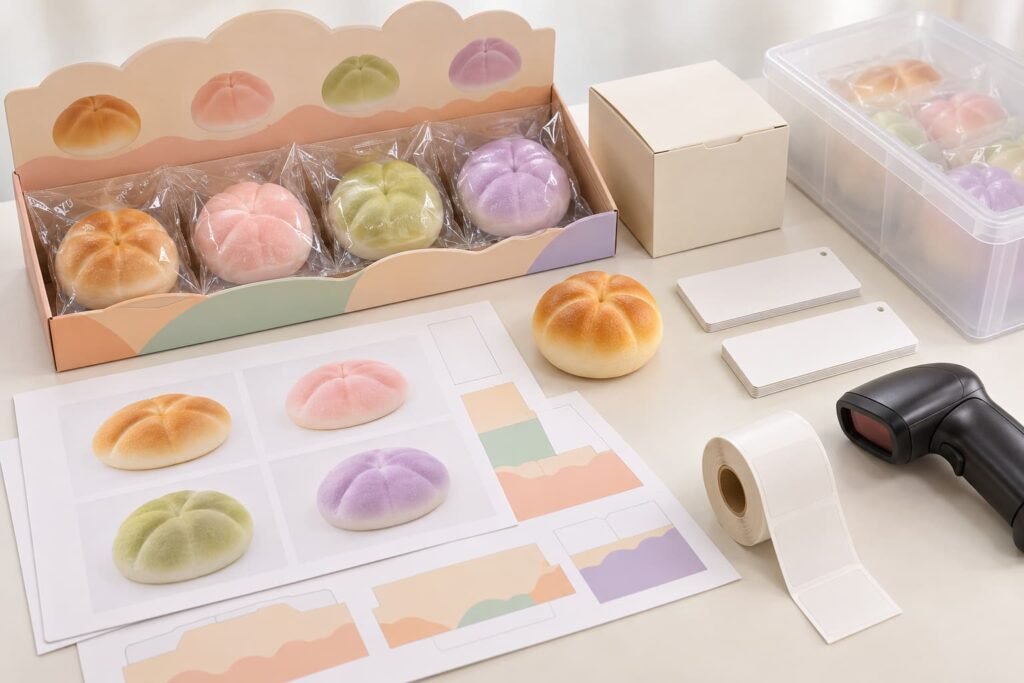
Record Product and Packed Weight Separately
Weigh the loose sample and the complete retail selling unit. This helps the buyer compare future samples, estimate packaging and fulfillment effects, and detect obvious version changes. Do not treat one sample measurement as a universal production tolerance. If weight limits matter, agree on a written range and measurement method with the supplier.
For mixed sets, record the weight of each materially different design where practical. A collection of similarly sized characters may still vary because of shape, construction, attachments, or packaging.
Approve Material Direction and Construction
A visual sample cannot confirm a formulation. Ask for the product construction and material description used for the reviewed version, including the soft body, coating, printed ink or paint, scent, filling, attachments, adhesives, and packaging contact materials as applicable.
For PU foam slow-rising toys, verify that the sample has the intended density, compression feel, recovery character, surface skin, and finish. For TPR or TPE products, review stretch, surface tack, seams, molded tabs, sealed areas, and any disclosed filling. For small mochi-style toys, check the simple form, finish, dust attraction, and package fit.
Do not approve a sample based on a material label alone. “PU,” “TPR,” and “TPE” cover broad product directions; the approved experience comes from the complete construction.
Use a Repeatable Tactile Review
Words such as soft, slow, stretchy, dense, and bouncy are subjective unless the project defines how they will be compared. Create a simple buyer-side observation method and use it consistently across revisions.
- Condition samples in the same reasonable environment before comparison.
- Use the same squeeze location and a similar level of compression.
- Compare the sample beside the agreed reference rather than relying on memory.
- Observe compression feel, release, recovery pattern, surface change, and final shape.
- Repeat enough times to detect obvious inconsistency or visible damage.
- Record the method, sample identity, observations, and any unresolved question.
This review is useful for purchasing alignment, but it is not a validated durability or safety test. If the order requires formal performance testing, define the method, sample preparation, equipment, acceptance criteria, and responsible qualified party separately.
Inspect Surface, Seams, and Finish
Review the sample under neutral, repeatable lighting. Look at every side, including the base and areas hidden by packaging. Note:
- surface bubbles, pinholes, cuts, cracks, rough zones, or exposed material;
- unexpected stickiness, oiliness, powder, residue, discoloration, or strong abnormal odor;
- visible seams, flash, poorly bonded areas, or irregular edges;
- coating coverage, gloss level, matte effect, translucency, glitter, or other approved finish;
- surface changes after normal squeezing;
- contact marks from bags, windows, dividers, chains, or accessories.
Some handmade decoration and soft materials naturally show variation. If variation is commercially important, document acceptable examples or written limits rather than expecting production to match a retouched rendering exactly.
Approve Color on the Physical Product
Use color references to communicate the target, but approve the result on the actual material, coating, and surface. The same color can look different on foam, translucent TPR, matte paint, glossy coating, or printed paperboard.
Check body color, gradients, cheeks, toppings, small details, and the relationship between product and packaging. Review color under a defined light source when color accuracy is critical. Photograph the approved sample for identification, while recognizing that photographs and screens can shift color.
For multi-color assortments, specify whether one sample approves the construction only or whether every colorway requires physical approval. A green sample cannot automatically define the final look of pink, purple, or translucent variants.
Check Printing, Logo, and Decoration Alignment
Inspect eyes, mouth, patterns, text, and logos in the product’s relaxed state and after gentle squeezing. Confirm the approved artwork file, size, position, orientation, color, print method, and relationship to molded features.
Ask whether decoration may rub against the package or attachment. A logo that is readable on a flat proof may distort on a curved body. Fine lines can close, small gaps can disappear, and face printing can look off-center even when the digital file is correct. Use actual-size physical samples for final decisions.
Evaluate Accessories and Attachment Points
If the product includes a keyring, chain, clip, strap, insert, charm, tag, or other accessory, approve the complete assembly. Record component material, dimensions, color, finish, connection method, and intended orientation. Check the soft material around the connection point, hardware edges, movement, and contact with decoration.
Do not approve the main body while leaving a temporary attachment unrecorded. The attachment can change the package, weight, use pattern, mechanical assessment, and product identity.
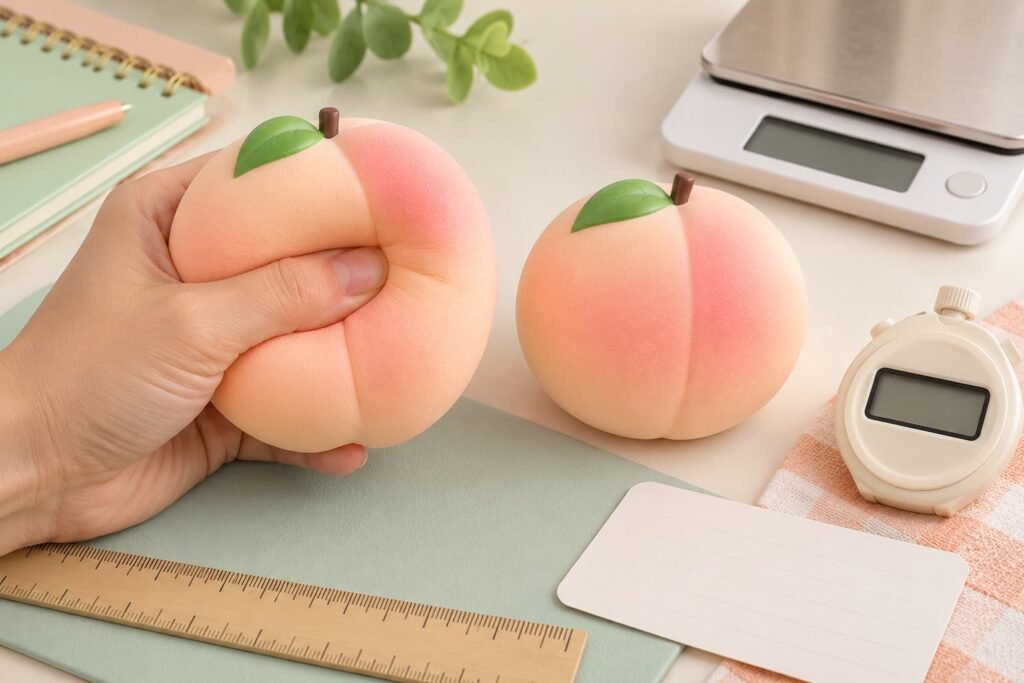
Test the Real Packaging Configuration
Place the approved sample in the exact proposed bag, box, insert, display tray, or gift set. Check product orientation, space, compression, film contact, window contact, movement, hang hole, closure, and removal. Allow the product to rest in the package, then remove it and observe whether it returns to the intended shape.
Approve the packaging structure and printed artwork as connected but separate checkpoints. Confirm:
- package dimensions and material;
- dieline and artwork revision;
- product name, SKU, and variant identification;
- barcode area and buyer-provided data;
- age presentation, warnings, languages, responsible-party, and traceability information as required;
- units per pack, display, inner pack, and master carton;
- assortment ratio and product orientation;
- carton dimensions, weight, protection, and marks to be confirmed.
The squishy toy counter display packaging guide provides a deeper packout framework when the sample will be sold in a display tray.
Keep Product Approval Separate From Compliance Approval
An approved sample does not prove that the toy complies with every requirement. The responsible business must identify the intended age group, destination country, sales channel, exact construction, applicable rules, testing scope, certification duties, labeling, and records.
A test report for another color, filling, coating, accessory, factory, or product version may not support the new sample. Give the qualified laboratory or compliance specialist the exact product identity and ask what evidence applies. Dongyu Toys’ squishy toy safety testing and compliance checklist explains how to match documents to the product and package.
Create the Golden-Sample Approval Pack
Once the final version is accepted, create a controlled approval pack. “Golden sample” is a useful name, but the record matters more than the label.
Include:
- the retained physical sample or clearly defined retained samples;
- dated photographs of all sides and the packed configuration;
- buyer and supplier SKU mapping;
- final dimensions, unit weight, and agreed measurement points;
- construction and material description supplied for that version;
- tactile comparison notes and any controlled reference;
- color, artwork, logo, and decoration files with revision numbers;
- final packaging structure, artwork, labels, display, and carton details;
- approved deviations and remaining open items;
- approval date, decision owner, and change-control rule.
Where practical, the buyer and supplier should retain matching identified references. Store samples away from heat, sunlight, moisture, dust, and conditions that could change the material. If a physical sample may age, document fresh photographs and the written product standard so the order does not rely on a deteriorated object alone.
Translate Approval Into the Purchase Order
The purchase order, pro forma invoice, specification, artwork, and packaging files should identify the same version. Copy controlled information from the approval pack rather than retyping it from memory.
Before production release, reconcile:
- product SKU and revision;
- quantity by design and color;
- material and construction description;
- dimensions and agreed tolerances where required;
- decoration and artwork versions;
- packaging, assortment, and carton configuration;
- required documents and testing responsibilities;
- inspection method and release authority;
- approved change process;
- commercial schedule after final approvals.
If anything changes after approval, issue a written change record and decide which sample, test, package, price, timing, or inspection item must be reviewed again. Do not edit the old approval silently.
Use the Approved Sample During Bulk Quality Control
Production and pre-shipment inspection should compare actual units with the controlled reference and specification. The approved sample does not replace an inspection plan; it makes the plan measurable.
Inspectors can compare product identity, dimensions, weight, color, print position, surface, squeeze behavior, attachments, packaging, assortment, and carton data. They should report exact observed differences rather than saying only “not like sample.” The squishy toy quality control checklist explains how to structure the shipment gate separately from compliance review.
Frequently Asked Questions
What should buyers check before approving a squishy toy sample?
Check the sample identity, shape, dimensions, weight, construction, tactile feel, recovery or stretch, surface, seams, color, decoration, accessories, package fit, assortment, target-market information, and unresolved points. Record the decision against one exact version.
Is a photo enough to approve a custom squishy toy?
A photo is useful for communication and version control, but it cannot reliably communicate tactile feel, recovery, weight, package pressure, odor, surface tack, or every three-dimensional detail. Use a physical sample for final product approval when these factors matter.
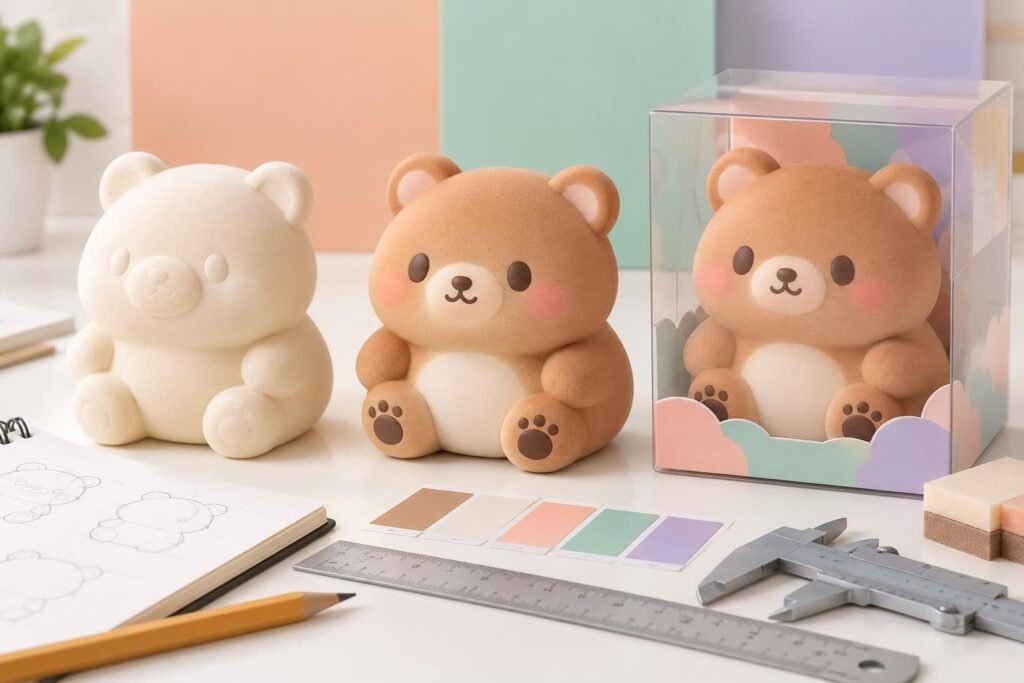
What is a golden sample?
It is the identified physical sample and connected written record used as the production and inspection reference. It should include version, measurements, artwork, packaging, photos, approved deviations, and change-control information.
Does sample approval replace toy testing?
No. Product approval confirms the commercial reference. Compliance review determines the requirements, test scope, certification, labeling, and records for the exact product and destination. Keep the two decisions connected but separate.
What happens if the factory changes something after approval?
The supplier should disclose the proposed change in writing. The buyer should assess its effect on appearance, feel, package, cost, schedule, testing, documentation, and inspection, then issue a new approval or rejection. The previous sample should not be silently treated as still valid.
Prepare Your Squishy Toy Sample Review
Dongyu Toys supports OEM/ODM discussion for custom shapes, PU and TPR/TPE directions, colors, tactile feel, decoration, packaging, and samples. To request a sample review or quotation, send the concept, size, material direction, quantity, package, intended age group, destination market, and required approval stages through the Dongyu Toys inquiry form. A controlled sample process helps turn the design into a clearer production reference.