Dongyu Insights
Custom PU Peach Squishy Design: Groove, Blush Map and Sample Approval
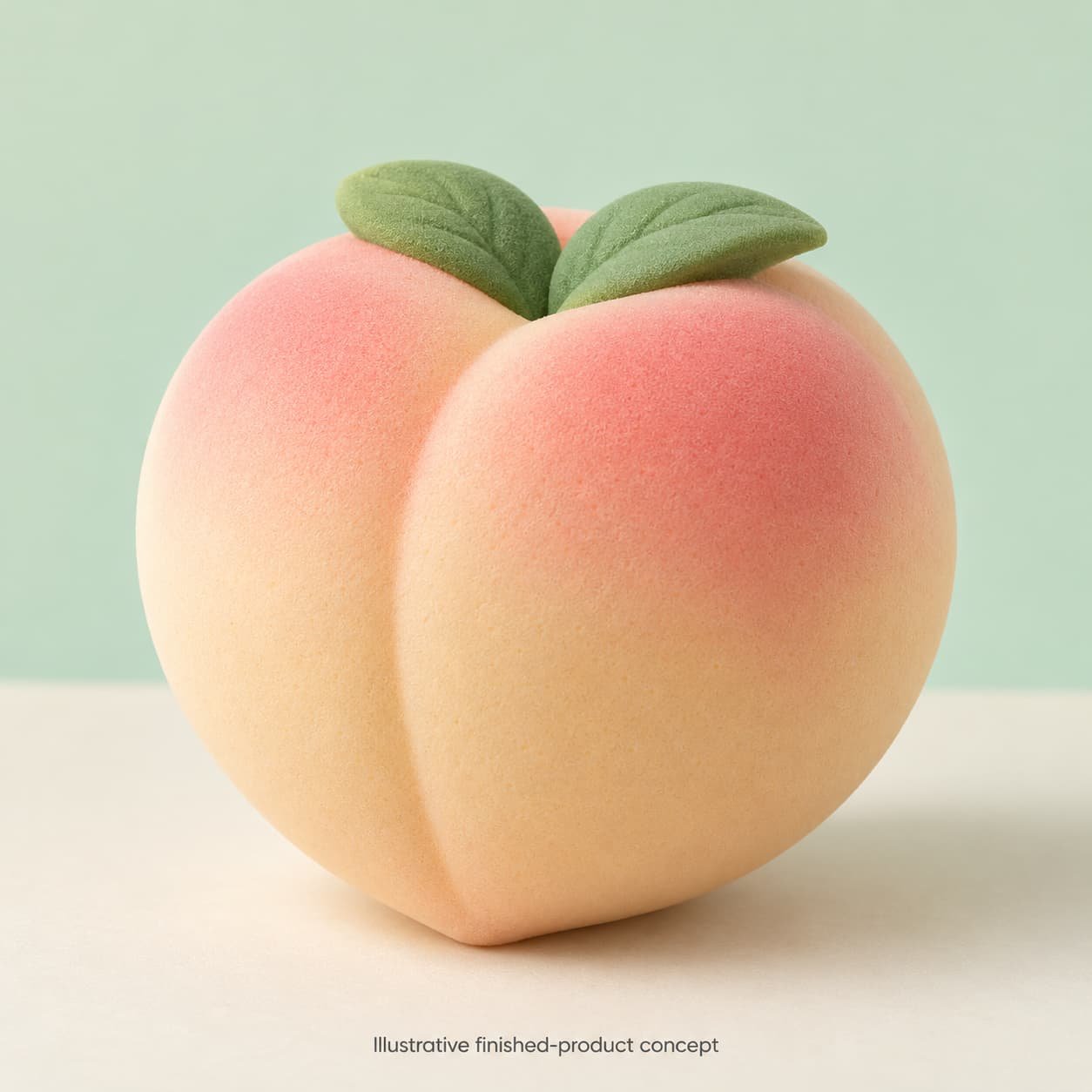
Custom PU peach squishy design becomes easier to quote and approve when the buyer separates three things: the peach shape, the blush decoration, and the physical sample requirements. A beautiful pink render cannot tell a supplier where a fruit groove ends, where a manufacturing line may appear, or how much variation is acceptable in the color fade.
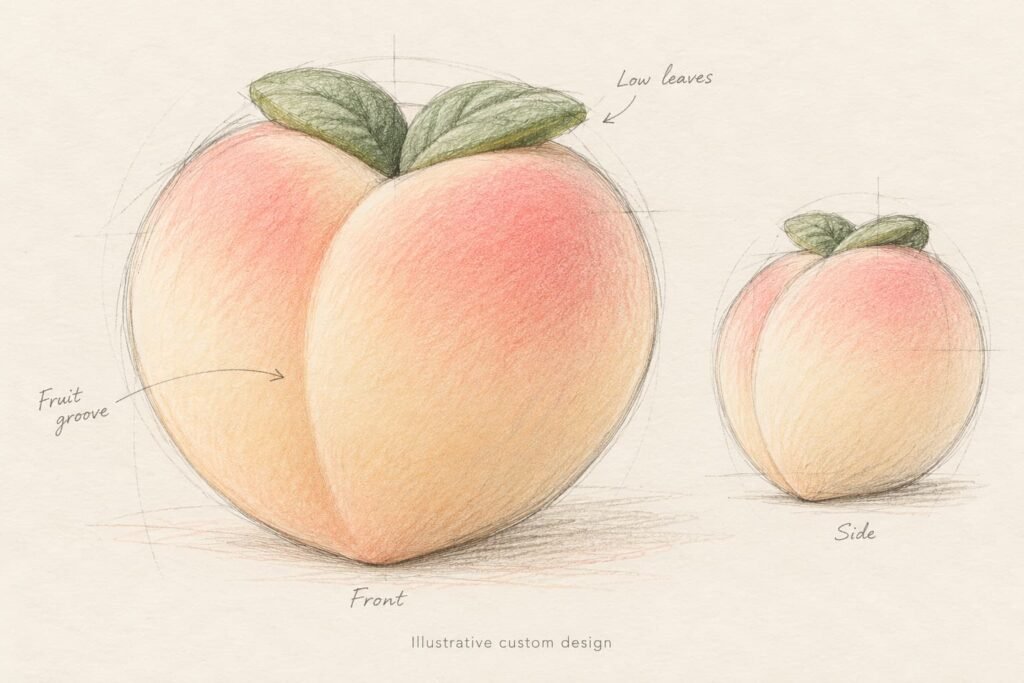
This guide develops one original peach concept for a private-label fruit toy project: a rounded body with a blunt lower tip, a shallow front groove, cream-apricot coloring, warm pink shoulders, and two low green leaves. The four images follow the same concept from sketch to colored views, 3D review, and a finished-product visualization. They are illustrative designs, not production drawings, manufactured samples, or evidence of tested performance.
Dongyu’s fruit squishy range includes peach shapes and describes custom shape, color, packaging, and material options. For this project, request PU foam specifically and have the supplier confirm the proposed construction. The aim is a usable development brief, not a promise that every visual detail is already production-ready.
Start with a peach project, not a copy request
Public wholesale search results show peach squeeze toys, including marketplace Bestseller labels in some indexed listings. Supplier pages also describe PU foam peach products. These are category signals, not proof that one peach shape leads worldwide sales or that every listed peach uses the same material.
Use those references to identify familiar features: a rounded fruit outline, a central depression, soft color transitions, and leaf accents. Develop your own proportions, groove curve, color placement, and packaging artwork. Do not copy a competitor’s sculpt, character expression, logo, photography, or branded box.
Choose the commercial use before detailing the toy. A single gift-shop item needs a different presentation brief from a mixed fruit assortment. State the sales channel, intended destination, proposed user group, quantity scenario, and packaging direction. These are inquiry inputs; they do not establish an approved age grade, compliance status, price, or production commitment.
Stage 1: sketch the outline and identify the fruit groove
Draw the front silhouette without shading first. For this concept, the shoulders are broad and rounded, the lower end is blunt, and the leaves stay close to the body. Add a side sketch to define depth. A front view alone can hide a very flat body or a projecting leaf that changes the package requirements.
A fruit groove is not automatically a mold line
Label the intended shallow front depression fruit groove. It is a visual part of the peach design. Separately ask the supplier to propose any tooling division, parting-line position, trimming approach, and expected appearance for the selected process. Do not assume a decorative crease can conceal a manufacturing line, or that a concept image proves a seamless construction.
Mark whether the groove continues over the top or stops before the underside. Specify the desired visual effect rather than inventing a depth that has not been reviewed. Ask the supplier to identify any geometry changes needed before the next design revision.
Stage 2: turn the colored views into a shared brief
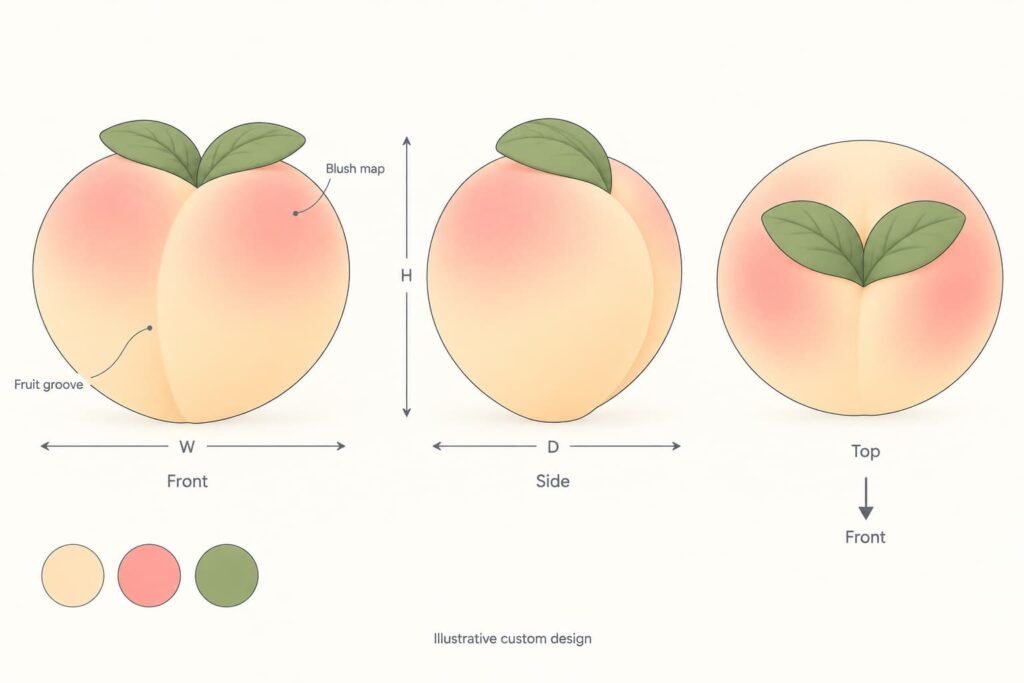
Show front, side, and top views with a consistent front direction. Give every view the same project and revision identifier. Use W for maximum width, D for front-to-back depth, and H for overall height; state whether the leaves are included. Enter proposed values and units only after the intended size is chosen.
The accompanying illustration is not calibrated. Letters and arrows communicate what to discuss; they are not measurements or tolerance commitments. Ask for a supplier-reviewed drawing with actual values, measurement points, uncompressed measurement conditions, and agreed variation before approving dimensions.
| Brief field | Buyer input | Confirmation needed |
|---|---|---|
| Project identity | Original peach concept; project code and revision | Supplier repeats the same reference on quotations and samples |
| Material direction | PU foam; desired tactile reference | Proposed formulation, construction, finish, and sample feasibility |
| Shape | Rounded shoulders, blunt tip, shallow front groove | Drawing review, tooling approach, and any required changes |
| Size | Proposed W, D, H; units and leaf inclusion | Measurement method and acceptable variation |
| Decoration | Cream-apricot body, pink shoulder blush, green leaves | Application method, physical color references, and fade limits |
| Branding | Packaging-led identity; optional product mark reviewed separately | Artwork placement, compatibility, and physical approval |
| Pack and market | Retail format, destination, proposed users, quantity scenarios | Pack fit, documentation scope, quotation, and schedule |
This is a project communication template, not a legal or industrial standard. Unconfirmed cells should say pending, with an owner and next action, rather than containing attractive but unsupported numbers.
Specify the blush as a map, not just a pink swatch
A single color chip does not describe a peach gradient. The supplier needs to know where the pink starts, where the cream remains visible, and how the transition should look around the sides and back. Divide the decoration brief into base color, blush location, and transition character.
Keep color and lighting separate
Use flat colored views to show intended color placement. A shaded 3D image may make a surface look pink simply because of its lighting. Label the actual blush region independently so a shadow is not mistaken for decoration. The lead concept keeps the lower body pale and places a soft pink fade over the shoulders.
For physical approval, agree the viewing conditions and compare the actual sample with the chosen physical references. Review front, side, back, and the area beside the groove. If a precise fade boundary matters, record approved and unacceptable examples on samples or controlled photographs rather than relying on an unqualified instruction such as “natural pink.”
Agree how much variation is acceptable for the proposed application process. A screen image cannot establish batch consistency. For broader planning, use the squishy color matching guide; keep this peach brief focused on the location and appearance of its blush.
Stage 3: use 3D review to resolve shape questions
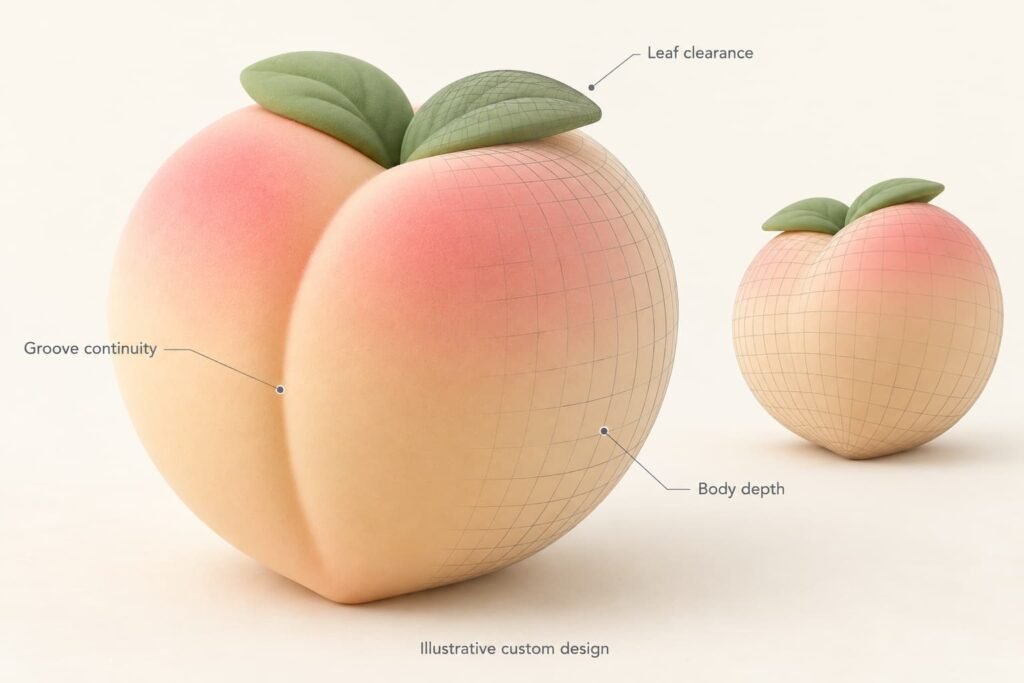
A colored shape review should make the peach volume legible without relying on a photographic foam texture. Check the shoulder fullness, front-to-back depth, lower tip, groove continuity, and leaf clearance. A mesh overlay can help distinguish this review stage from a finished-product visualization, but it is not evidence of an actual CAD file.
Ask the supplier whether the leaf form is proposed as part of the main body or another construction. The illustration does not decide that question. Record the answer and assess its implications for appearance, handling, packaging, and the relevant product requirements with the responsible technical reviewers.
Do not approve softness, recovery behavior, coating durability, or tooling feasibility from this image. Those need the appropriate physical samples, supplier review, and agreed checks. If the volume changes, revisit the colored views and pack dimensions rather than leaving contradictory files in the approval folder.
Control revisions before ordering the physical sample
Use one revision register for the sketch, colored brief, supplier drawing, decoration reference, and packaging file. A practical filename might be PEACH-A-R03-front-view. Record the date, owner, change, affected files, and approval scope. An email saying “looks good” should identify what was approved.
- Outline review: confirm the silhouette, groove direction, and leaf arrangement.
- Technical review: obtain the supplier’s proposed construction, dimensions, tooling notes, and open issues.
- Decoration review: agree the color references, blush map, and placement requirements.
- Physical review: identify the sample revision and record accepted items and unresolved issues.
A color approval must not silently approve a shape change. If the supplier changes the groove to suit tooling, update the geometry revision and check whether the blush map still applies. Keep superseded files clearly separated from the current release set.
Build a peach-specific sample acceptance matrix
Agree the inspection method and decision rules before judging a sample. The matrix below identifies questions to resolve; it does not prescribe an invented squeeze count, recovery time, tolerance, or pass threshold.
| Review area | What to check | Record before approval |
|---|---|---|
| Shape and groove | Outline, depth, groove continuity, agreed manufacturing-line appearance | Drawing revision, measurement points, appearance reference |
| Blush decoration | Base color, pink placement, transition, back coverage | Physical references, viewing conditions, accepted variation |
| Leaf region | Position, construction, surface, interaction with the body | Supplier explanation and agreed handling review |
| Tactile behavior | Squeeze feel and recovery under an agreed procedure | Sample ID, conditions, method, result, and acceptance rule |
| Surface condition | Finish before and after agreed handling and packaging checks | Observed marks, method, photos, and disposition |
| Retail pack | Leaf clearance, rubbing, fit, presentation, artwork revision | Pack sample ID, contact points, approved layout |
Use the sample approval checklist for the wider approval record. Keep product acceptance separate from destination-market compliance review; a visually acceptable sample does not establish legal suitability.
Keep private-label packaging honest and practical
For the first peach project, packaging-led branding can preserve the fruit appearance without forcing fine text onto a curved blush area. If a product logo is needed, review it separately with the supplier rather than assuming any underside or leaf can accept it.
Test the proposed pack with the actual sample. Check whether the leaves are held under pressure, whether decoration rubs against contact points, and whether the product sits as intended. Final pack dimensions should follow the reviewed product and packing method, not the apparent scale of an AI image.
Use confirmed product photography for final retail claims. If concept artwork is used before sampling, identify it clearly. The square image in this guide is labeled Illustrative finished-product concept and must not be presented as a completed Dongyu production sample.
FAQ
Can I customize the peach shape and color together?
Submit both in one brief, but track geometry and decoration approvals separately. Ask the supplier which changes affect tooling, sampling, or quotation scope before proceeding.
Does a Bestseller listing prove this PU peach will sell?
No. Marketplace labels have a limited platform context, and materials may differ between products. Validate the proposed item with your own buyers, channel, positioning, and commercial assessment.
Are the design illustrations ready for manufacturing?
No. They communicate intent. Supplier-reviewed engineering details, actual dimensions, construction decisions, and physical sample approval remain necessary.
What should I send for a quotation?
Send the current design brief, PU direction, proposed size, blush references, quantity scenarios, packaging direction, destination market, and open questions. Request written confirmation of the development scope and commercial terms.
Discuss your custom PU peach squishy project
Contact Dongyu Toys with your custom PU peach squishy design brief and ask which details can move to technical review and physical sampling. Keep groove geometry, blush decoration, packaging, and approval responsibilities explicit before authorizing the next stage.