Dongyu Insights
Custom Gummy Bear Squishy Toys: TPR Color & Sample Approval Guide
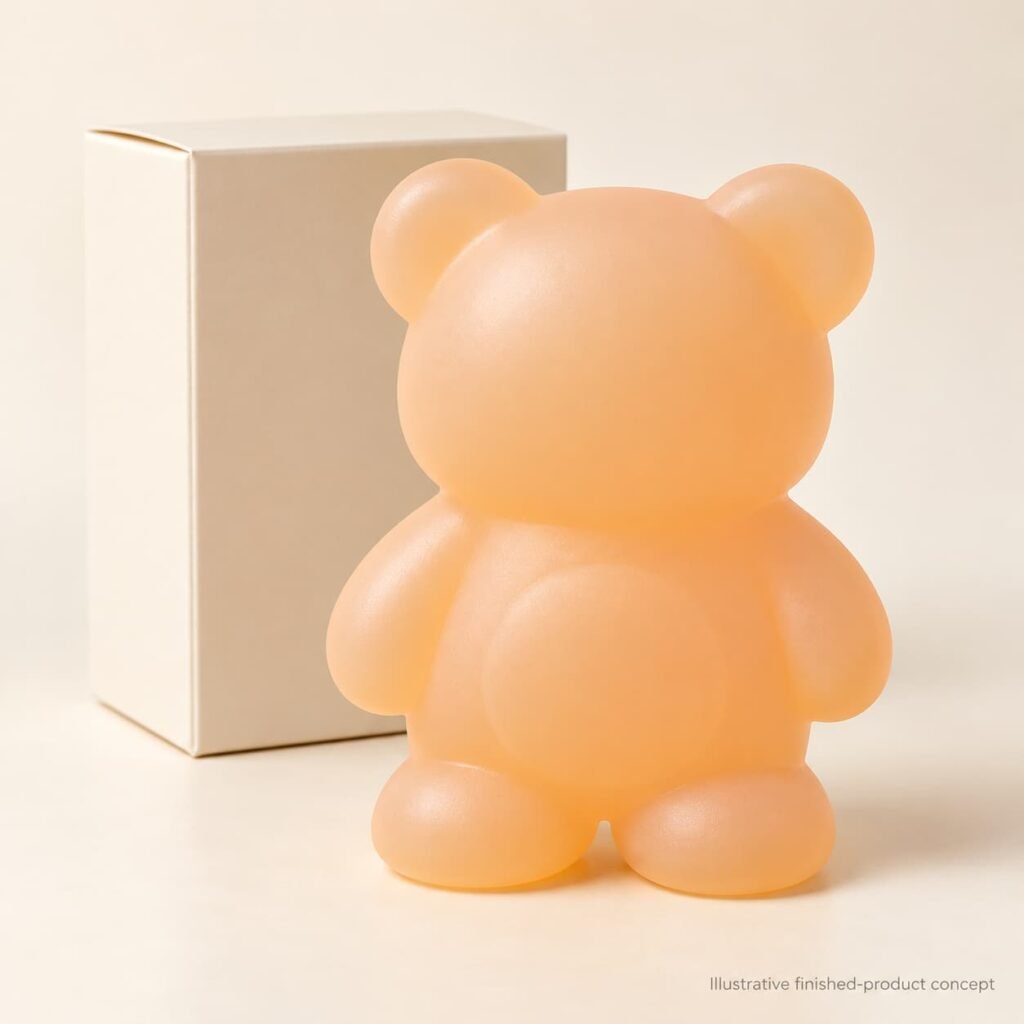
Custom gummy bear squishy toys are easier to quote when the buyer separates appearance from construction. “Transparent,” “soft” and “slow recovery” are not complete specifications. For a private label TPR bear, agree what the product should look like, how it should feel and how those decisions will be checked on samples.
This guide follows one original apricot-colored, faceless bear concept. It is a proposed custom project, not a replica of a branded toy or evidence of an existing Dongyu mold. The four illustrations communicate design stages; none replaces a physical sample.
Start with category demand, not a copied bestseller
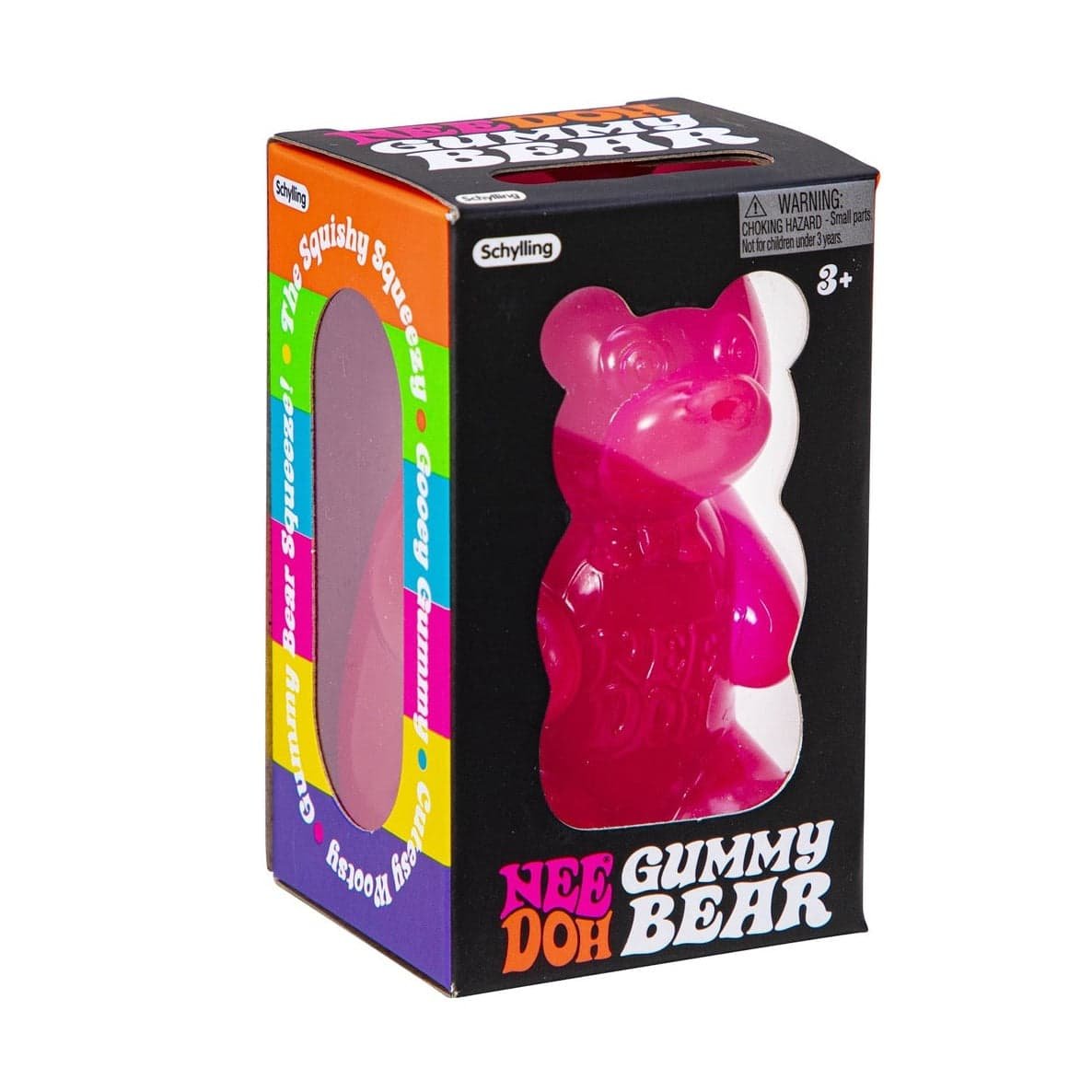
Overseas retail research on October 31, 2026 found gummy bear squeeze toys across US retail listings. Walmart search results included branded bear products, while Grove Flower & Toys provided a detailed bear product page and packaging photographs. Retail presence supports investigating the category, but it does not prove that every bear design is a bestseller.
Buyer research must keep the exact product and sales indicator together. A bestseller badge on a cube, a purchase count on a game-controller toy or a recommendation carousel cannot establish sales for a bear. Use category signals to start a commercial review, then validate the proposed price, audience and sales channel with your own customers.
A practical brief for a custom TPR bear
Define one master SKU before adding colors or accessories. For this example, the visual direction is a single apricot bear with broad ear roots, short integrated arms, rounded feet and a shallow belly oval. Branding begins on the packaging rather than a borrowed character face.
| Field | Buyer decision | Supplier confirmation |
|---|---|---|
| Project | GB-01, original bear, Rev A | Tooling availability or development route |
| Market | Country, intended audience and channel | Product-specific evaluation requirements |
| Dimensions | Height H, width W, depth D in mm | Measuring method and achievable tolerances |
| Appearance | Apricot C1; target translucency; surface finish | Physical color and optical reference options |
| Feel | Preferred compression and recovery reference | Compound, construction and compatible filling if applicable |
| Order | Quantity per SKU and color | MOQ by shape, color and packaging version |
| Branding | Package artwork and optional product mark | Placement, method and sample verification |
| Delivery | Destination and required arrival date | Sampling, production and transit separately |
Mark unknown values as pending. Do not copy dimensions, age labels or material claims from a retail reference. Through Dongyu’s custom project service, ask which parts of the brief can be supported and which need development. A quotation should identify those assumptions explicitly.
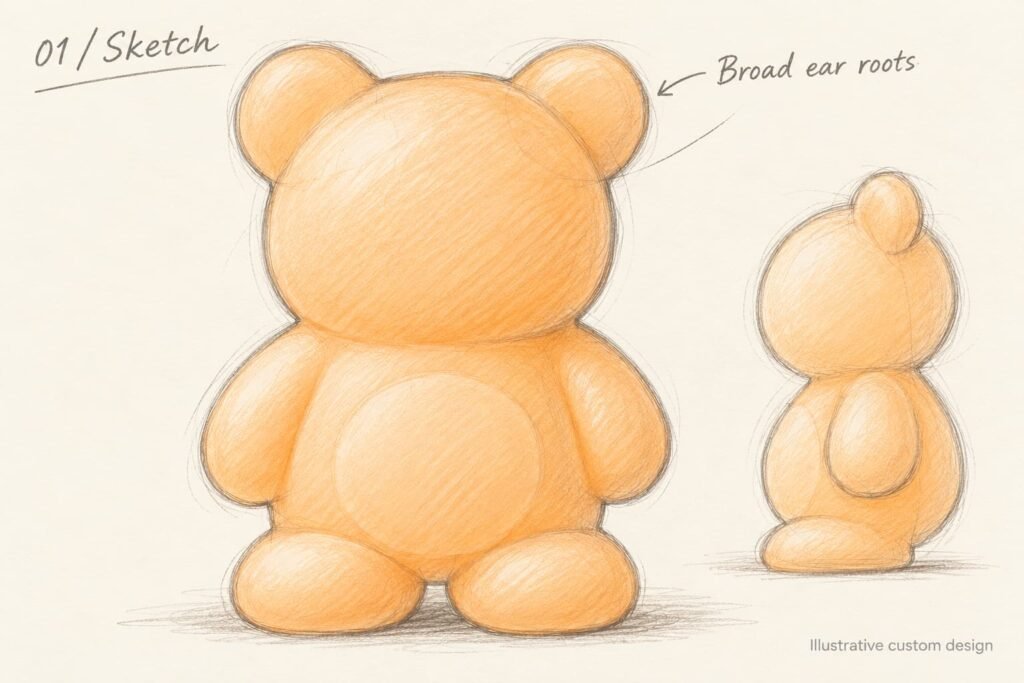
Stage 1: settle the silhouette before discussing transparency
A sketch should show the front outline and a profile. Pay particular attention to where the ears meet the head and the arms meet the body. Thin connections may look attractive in a drawing but require specific supplier review for the intended handling and construction.
Choose whether the bear stands for display or is mainly held in the hand. Identify the intended squeeze area and any movement expected in normal use. Do not advertise extreme pulling, twisting or stretching without agreement on the construction and appropriate evaluation.
Sketch approval settles the visual direction only. It does not approve tooling, material, durability or recovery speed. This separation prevents an attractive image from becoming an unintended production commitment.
Stage 2: define color and translucency as separate approvals
Use consistent front, side and back views. Label the overall height H, width W and depth D, plus a color reference C1. The letters on the illustrative sheet are reference labels; numerical dimensions belong in the controlled specification after agreement.
A translucent apricot can look different with lighting, background and product thickness. Therefore, do not approve color from a single backlit photograph. Ask to review the sample against consistent light and dark backgrounds and retain the accepted physical reference. Record both the viewing arrangement and the sample ID.
- Specify whether the target is clear, translucent or opaque using an agreed reference.
- Review surface sheen separately from body color.
- Ask whether internal contents or closure areas will be visible.
- Check that packaging does not create a misleading color impression.
- Do not turn a proposed appearance into an unsupported material claim.
For a range of colors, approve each variant rather than assuming that a successful apricot automatically validates blue or purple. Use the color matching guide to structure the reference discussion.
Stage 3: review form and construction independently
The 3D appearance review should check ear transitions, arm joins, foot separation and the belly feature. Compare it with the views rather than accepting a flattering camera angle. Ask the supplier to identify features that require changes before tooling work.
The colored image and wireframe-style outline are illustrative, not editable CAD or a tooling model. A manufacturer must still confirm the compound, construction, section requirements, tooling split and closure approach where applicable. If a filled construction is proposed, request the exact outer material and filling description, plus the compatibility evaluation plan.
Do not infer the contents from a gummy appearance. “TPR” identifies a material direction, not a complete recipe or a guaranteed feel. Agree how compression and recovery will be assessed under recorded conditions, using a representative physical sample rather than an animation.
What a comparable wholesale quotation should include
Ask for the minimum order by shape, color, decoration and package. State quantities for each planned SKU rather than providing only a total. A new-tool project and an available-tool customization can have different cost structures; ask the supplier to identify the route being quoted.
Separate tooling, development samples, sample shipment, unit production, decoration, individual packaging, display packaging and freight assumptions. Confirm the destination and delivery terms. Avoid comparing a loose-packed unit price with a retail-ready price as though they were equivalent.
Use the quotation comparison guide for the broader cost worksheet. Request written assumptions for revision rounds and approval milestones. No fixed MOQ, price or lead time is promised by this concept.

Sample acceptance matrix for a translucent bear
Ask for samples representing the proposed material, construction, finish and pack. The following is a project worksheet, not an industrial or legal standard. Supplier and buyer must agree the methods and limits before evaluating samples.
| Item | How to review | Approval evidence |
|---|---|---|
| Shape and dimensions | Relaxed sample, agreed orientation and measuring points | Actual values and agreed tolerances |
| Color and translucency | Same lighting and background as the accepted reference | Sample ID and recorded observations |
| Squeeze and recovery | Agreed handling sequence and conditions | Reference behavior and deviations |
| Ear and arm transitions | Inspect before and after agreed intended-use evaluation | Visible damage or unwanted changes |
| Surface | Check tack, transfer, marks and finish | Accepted appearance reference |
| Construction | Supplier-agreed evaluation for the actual construction | Opening, damage or leakage observations if applicable |
| Packaging contact | Packed sample under agreed storage and handling | Sticking, staining, deformation and fit |
Keep one disposition for every open issue: accept, revise or retest. Name the approver and retain the approved sample. The sample approval checklist can help organize the records without replacing product-specific evaluation.
Private label packaging without candy confusion
A gummy-inspired toy should be presented clearly as a non-edible product. Avoid food-like presentation that obscures its purpose. Confirm intended audience, instructions and destination-market requirements with suitable specialists for the actual product; do not borrow a competitor’s age label or certification artwork.
Check how the package supports the ears and feet, how the toy contacts any window or insert, and whether a packed sample keeps its agreed appearance. If the supplier proposes a window box, evaluate the complete combination rather than approving the toy and box separately.
For online sellers, request packed dimensions and weight before comparing delivered costs. For retail buyers, confirm display orientation and barcode placement. Do not promise that a packaging method is compatible until the representative packed sample has been reviewed.
Control revisions before production approval
Use GB-01-RevA for the first brief and issue a new revision whenever geometry, material, color or packaging changes. Record the reason, date and approver. Keep separate artwork and physical sample IDs if they advance at different times.
Before approval, reconcile the quote, drawing, material description, packaging file and retained sample. Ask the supplier to confirm that all refer to the current specification. A color change should not silently authorize a different construction. After an approved change, check the effect on price, MOQ and schedule.

Buyer FAQ
Can I develop an original bear shape?
Submit drawings for feasibility review. The supplier must confirm whether suitable tooling exists or development is needed. This concept does not establish Dongyu’s mold availability.
Can I choose the filling and softness?
Describe the desired behavior and request compatible options. Filling, outer material and construction must be reviewed together; do not specify an unverified combination solely because it appears in another supplier’s listing.
What is the MOQ for private label gummy bear squishy toys?
Request a project-specific minimum by shape, color and package. Share the quantity per variant and ask which choices affect the minimum. No universal MOQ applies to every custom project.
Is the final image a physical sample?
No. It is an illustrative finished-product concept. Only an agreed physical sample and controlled specification can establish the approved production target.
Send a focused TPR bear RFQ
Send Dongyu Toys your original bear brief, target size, quantities by color, sales market, desired feel, branding, packaging and arrival deadline. Request feasibility feedback, MOQ, an itemized quote and sampling steps. Ask the manufacturer to identify unresolved engineering parameters before you approve development.