Dongyu Insights
Squishy Toy Quality Inspection Checklist: A Pre-Shipment Guide for Importers
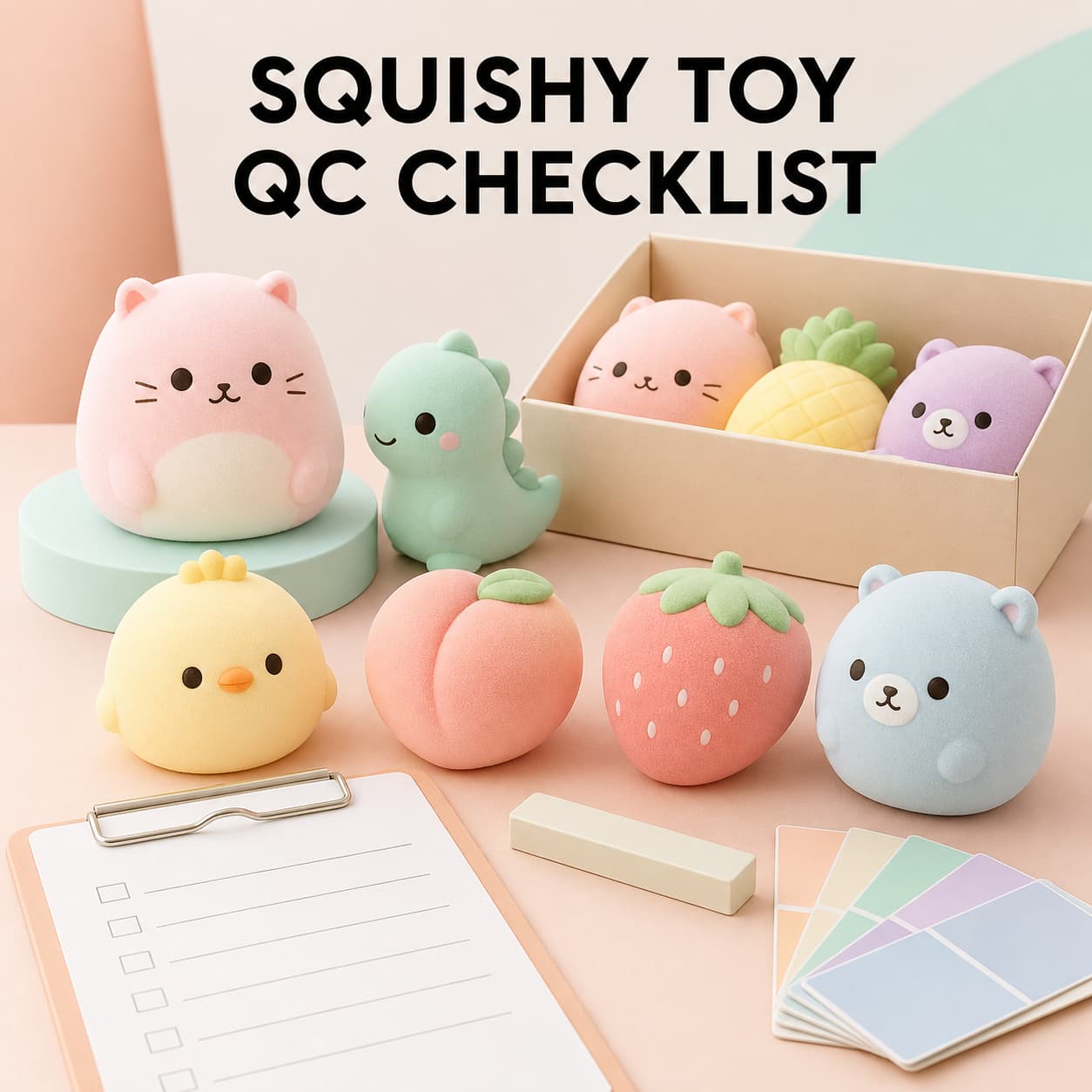
A squishy toy quality inspection checklist turns a subjective review into a repeatable purchasing control. Its purpose is to confirm that bulk goods match the approved product and packaging specification, identify visible or functional defects, verify quantities and assortments, and check whether carton information agrees with the shipment plan.
Inspection does not prove that a toy satisfies every legal or chemical requirement. On-site checks and laboratory testing solve different problems. An inspector can compare shape, color, workmanship, squeeze behavior, packing and quantities. A qualified laboratory evaluates requirements that cannot be confirmed reliably by sight, measurement or normal handling. Importers should plan both activities according to the exact SKU, intended age positioning and destination market.
Define the Inspection Standard Before Production
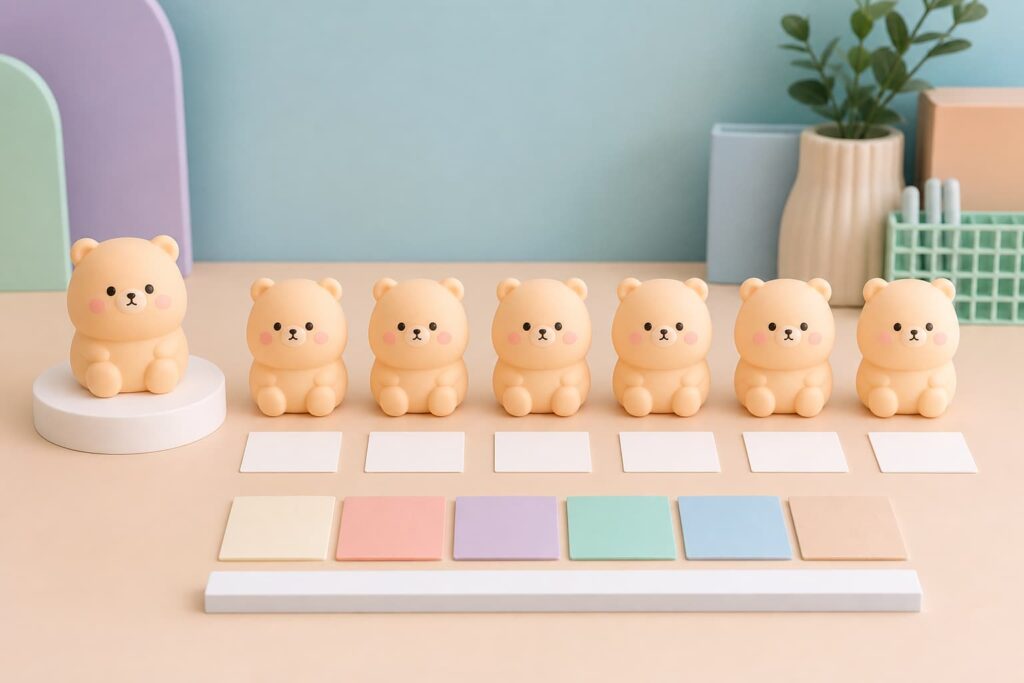
An inspection cannot be consistent when the standard exists only in scattered messages. Create one controlled specification for each product version and connect it to the purchase order, approved sample and packaging files.
The reference pack should identify:
- Buyer SKU, supplier SKU and product revision
- Approved physical sample or sample code
- Material and construction description supplied for that version
- Target dimensions and agreed measurement method
- Unit weight direction or reference
- Color, finish and decoration files
- Expected hand feel, recovery and surface behavior
- Assortment ratio by design, color and size
- Unit pack, inner pack and master-carton configuration
- Approved artwork, labels and order quantity
Photographs support the record but are not the entire standard. Lighting changes perceived color, and a photograph cannot confirm weight, squeeze feel or internal construction. Keep an identified physical sample when practical and record every accepted change in one revision list. Dongyu Toys’ production process connects the brief, sample, pre-production confirmation, in-process checks and packing review.
Separate Inspection From Laboratory Testing
State what the inspection can and cannot establish. Visual and functional checks can identify obvious damage, variation and mismatches with an approved specification. They do not determine restricted-substance levels, migration, flammability or other technical requirements that need appropriate testing.
Maintain two connected records:
- Inspection record: goods sampled, observable checks completed, defects found and shipment disposition.
- Compliance record: reports, declarations, labels and technical documents applicable to the exact product and market.
The importer, retailer, qualified laboratory or compliance adviser should confirm which requirements apply and whether the evidence covers the final material, colors, components, age positioning and production version.
Agree on Defect Classes and Sampling Rules
Define how problems will be described before inspection. A potential safety or regulatory concern is different from a cosmetic issue. A major problem may make a product unsellable or materially different from the approved sample. A minor problem may affect appearance without preventing the intended sale. Actual examples must be tailored to the product and contract.
A small paint mark might be minor on a plain surface but more important if it covers the main facial feature. A slight softness variation may be acceptable within an agreed comparison range but unacceptable if the product no longer matches the approved selling experience.
If a formal sampling plan or AQL is used, agree the relevant standard, inspection level, sample size, defect classes and limits with the inspection provider before the visit. Do not invent a limit while reviewing the report. The document should also identify checks outside scope.
Confirm Product Identity, Quantity and Assortment
Start by confirming that the inspected goods are the goods ordered. Similar squishy toys can have different materials, fillings, sizes, finishes or packages even when their photographs look alike.
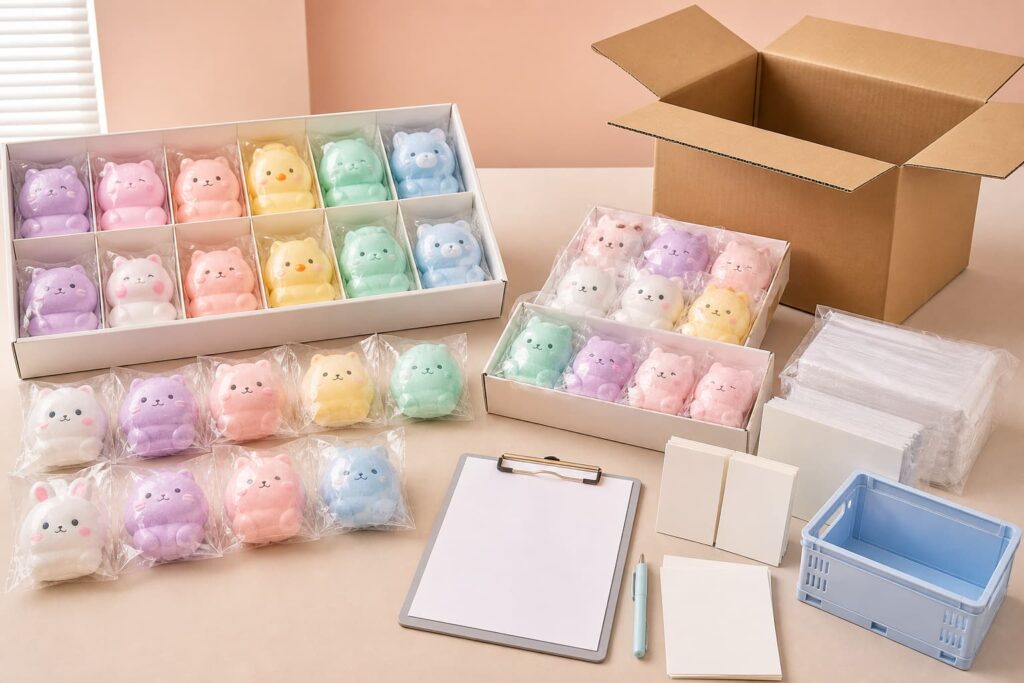
Compare the purchase order and packing list with selected cartons:
- Total order quantity and number of cartons
- Quantity by SKU, design, color, size and selling unit
- Mixed-assortment ratio inside packs and cartons
- Purchase-order and supplier references
- Current packaging artwork and language version
Select cartons from different shipment positions according to the agreed method rather than checking only cartons prepared in advance. Record which cartons and units were selected. For mixed designs, count the actual ratio instead of accepting “assorted” as a complete specification.
Compare Bulk Appearance With the Approved Sample
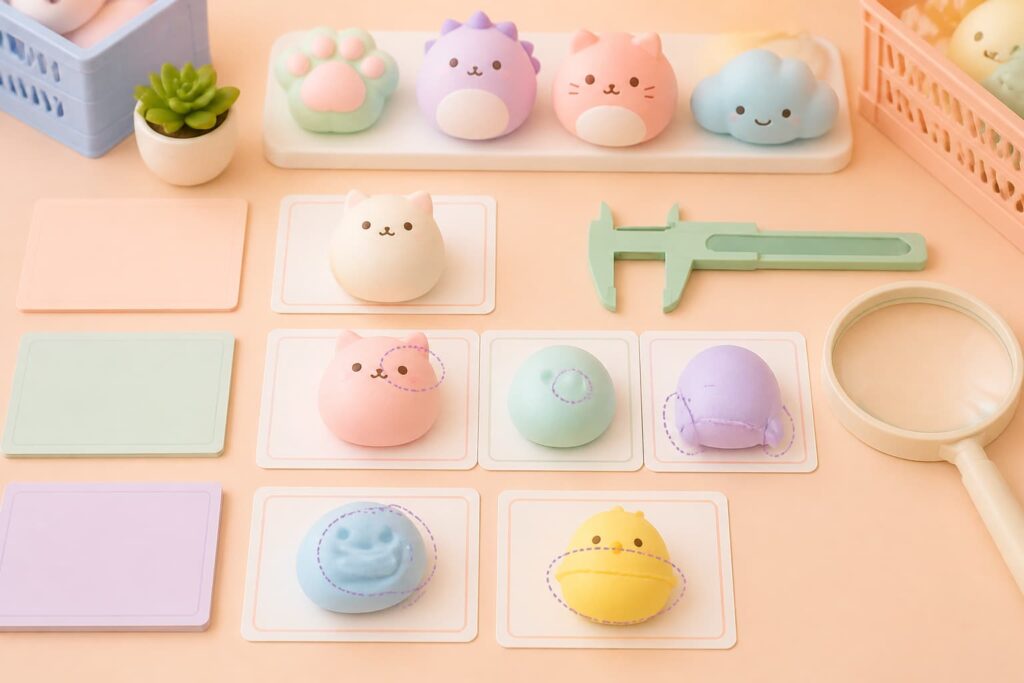
Place production units beside the identified approval sample under stable lighting. Review the front, back, base, seams and less visible areas—not only the angle used for catalog photography.
Depending on the product, look for:
- Shape distortion, uneven molding or unexpected seams
- Color differences between units or production groups
- Missing, smudged or misplaced printed details
- Paint coverage that differs from approval
- Dirt, dust, oil marks or foreign material
- Bubbles, cracks, cuts, pinholes or rough areas
- Loose accessories or decorative parts
- Unexpected tackiness, residue or abnormal odor requiring investigation
Some variation may be inherent in a soft material or decoration process, but acceptable variation should be defined through the approved sample or written examples. Avoid “quality not good.” Record the exact issue, location, frequency and affected SKU with photographs when useful.
Check Dimensions, Weight and Tactile Performance
Measure dimensions at points defined in the specification. A soft object can change shape under pressure, so the method and resting condition should be consistent. Record whether a value belongs to the unpacked toy, retail pack or another unit.
Check unit weight using the agreed basis. Weight can help identify a mismatch in size, density, filling level or construction, but it does not explain the cause by itself. Investigate repeated or material differences rather than making an unsupported conclusion.
Slow-rising PU foam styles
Compare softness, compression behavior, recovery direction, shape return and surface finish with the approved reference. Use the same simple handling sequence. A few squeezes are not a durability test; any repeated-compression procedure should be defined separately.
TPR, TPE, mochi or filled styles
Compare stretch, resistance, surface feel, recovery, seam or closure condition, and whether the product returns evenly after normal handling. If the construction contains a fill, document leakage or plug concerns according to the agreed defect rule. Do not apply a PU slow-rise expectation to a different construction.
For broader distinctions, see the squishy toy materials guide.
Inspect Printing, Logo and Decorative Details
Branding and small facial features can determine whether a product is saleable. Compare production with approved artwork and the physical reference.
- Logo position, orientation, scale and color
- Face alignment and spacing
- Print coverage, edge quality and registration
- Missing color areas, smears or transfer marks
- Artwork distortion after normal squeezing
- Alignment with seams, windows, folds or molded details
Use an approved example instead of expecting a photograph to define every tolerance. If the logo is on packaging, inspect the correct package version separately. The logo and private-label packaging guide explains the commercial difference between those locations.
Review the Complete Retail Package
Packaging is part of the finished selling unit. It protects the surface, presents the product and carries buyer-approved information. Inspect the product inside the final bag, box, tray or multipack—not only as a loose toy.
- Correct bag, box, tag, insert or display structure
- Current artwork and language version
- Product name, SKU and assortment information
- Buyer-approved barcode position and print quality
- Warnings, age information and responsible-party details where required
- Seals, closures, hang holes and window condition
- Product orientation and fit
- No crushed boxes, torn bags, heavy pressure or surface rubbing
A package can look attractive yet fail operationally. Check whether it stands, hangs or opens as intended and whether the toy remains presentable after carton packing. Use the custom squishy toy packaging guide when defining the pack.
Verify Inner Packs and Master Cartons
Carton mistakes can create shortages, freight changes and receiving delays even when the toys look correct. Count units in selected inner packs and cartons, then compare the results with the packing list.
- Units per selling pack
- Selling packs per inner pack
- Inner packs and total units per master carton
- Mixed-design or color ratio at each pack level
- Dividers, protection and packing orientation
- Carton closure and visible condition
- Carton dimensions using the agreed orientation
- Net and gross weight where required
- Buyer-approved carton marks and sequence
If measured carton data differs materially from the shipping quotation or booking record, ask responsible parties to recalculate the logistics plan. Any drop, compression or transport simulation should follow an agreed procedure; casual handling is not a defined packaging test.
Record Findings With Evidence
An inspection report should identify the product version, order, quantity available, quantity inspected, carton selection, checks completed, defects found and items outside scope.
For each significant issue, record:
- SKU and affected variant
- Exact defect and location
- Observed frequency in the inspected sample
- Photographs showing context and detail
- Comparison with the approved sample or written requirement
- Proposed classification under the agreed plan
- Supplier response and responsible owner
Separate observation from possible cause. “Print is shifted from the approved position” is an observation. “The machine was set incorrectly” is a cause requiring investigation.
Define Corrective Action Before Release
When problems are found, write down what happens next. Depending on severity, agreement and contract, the response may involve sorting, rework, replacement, packaging correction, additional inspection or holding shipment while a technical issue is investigated.
The record should state the affected product and quantity, responsible owner, required correction, completion evidence, reinspection requirement and final release authority. Do not approve shipment based only on a promise that goods will be fixed later.
Use Five Connected Records
Before release, confirm that five records agree:
- Purchase order: commercial product, quantity and packing basis.
- Approved sample: physical appearance and tactile reference.
- Specification: measurements, artwork and packaging configuration.
- Packing list: selling units, cartons, weights and quantities.
- Inspection report: sampled goods, findings, defects and disposition.
Every mismatch should have an owner and written resolution. This connection also helps repeat orders because the new production version can be compared with a clear historical reference.
Final Squishy Toy Quality Inspection Checklist
- Correct SKU, revision and approved sample identified
- Order quantity and assortment ratio verified
- Shape, color, surface and decoration compared
- Dimensions and weight checked by an agreed method
- Squeeze feel and recovery compared with the product reference
- Retail package, artwork, labels and fit reviewed
- Inner-pack and master-carton configuration counted
- Carton dimensions, weight and marks checked
- Inspection kept separate from laboratory evidence
- Defects described with location, frequency and photographs
- Corrective actions verified before release
- Purchase order, sample, specification, packing list and report reconciled
FAQ About Squishy Toy Pre-Shipment Inspection
Does visual inspection prove that squishy toys are safe?
No. It can identify observable defects and specification mismatches. It does not replace appropriate laboratory testing, technical documentation or the importer’s responsibility to determine market requirements.
What is the most important quality reference?
Use an identified approved sample together with a controlled written product and packaging specification. Neither should stand alone when important details are missing.
Can one checklist cover PU, TPR and TPE products?
The workflow can be shared, but tactile and construction checks must be product-specific. Slow-rising PU foam, solid elastomer and filled squeeze toys behave differently.
When should inspection criteria be prepared?
Prepare them before production and finalize them with the approved sample and packaging. Waiting until the shipment is complete makes classification and correction harder.
What happens when inspection finds a problem?
Document the issue, apply the agreed classification, identify affected quantity, assign corrective action and obtain completion evidence. Reinspection or shipment hold may be appropriate depending on severity and contract.
Plan Quality Checks Around the Actual Product
Dongyu Toys supports custom projects across PU foam, TPR/TPE gel-feel, mochi-style designs, surface finishes and retail packaging. Build a product-specific squishy toy quality inspection checklist by connecting the order brief, approved sample, packaging files and shipment configuration from the beginning.
Contact Dongyu Toys with your product reference, quantity, destination market, packaging and inspection requirements to discuss an OEM, ODM or wholesale project.