Dongyu Insights
Custom Logo Squishy Toys: Product Branding vs Private Label Packaging
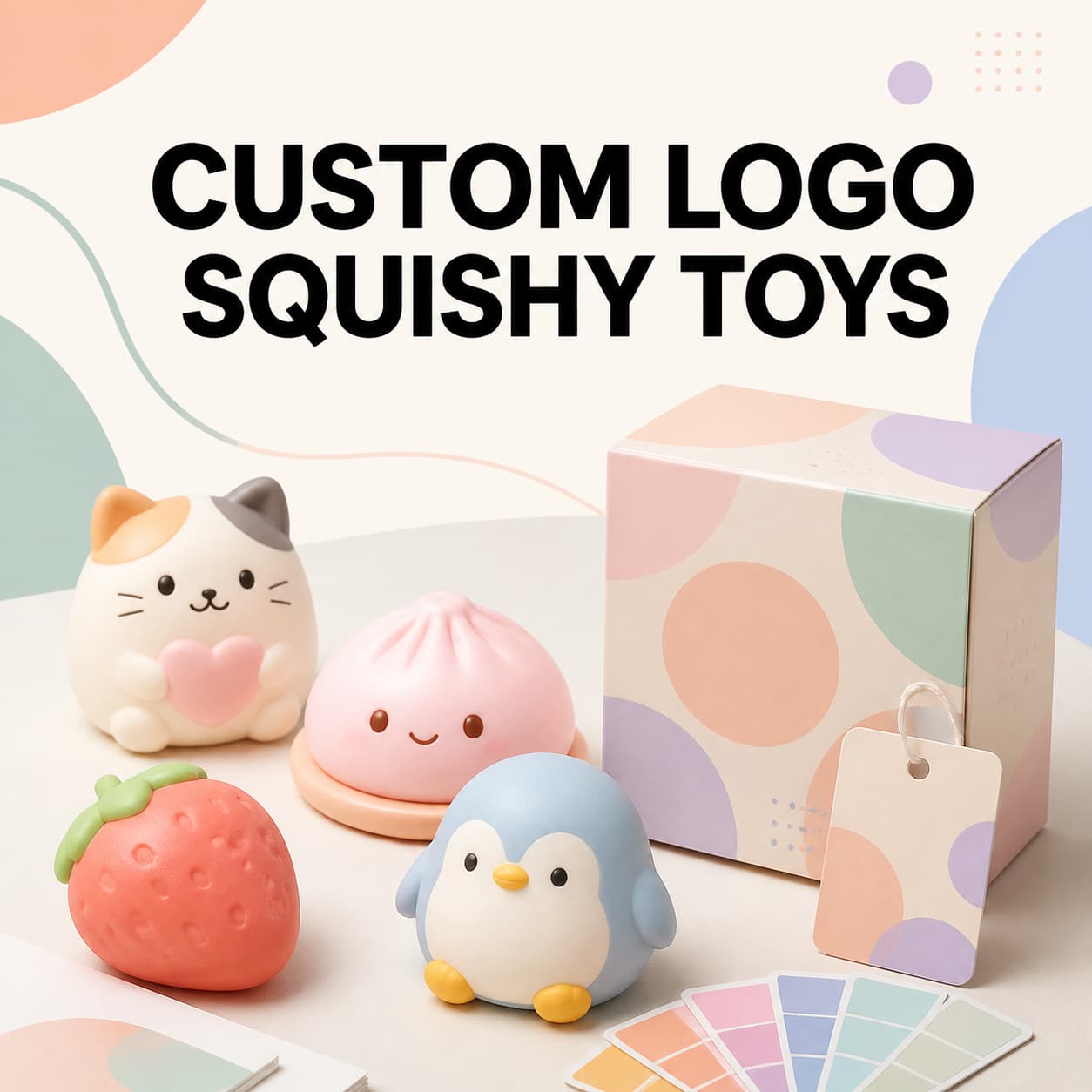
For toy brands, promotional buyers, retailers and online sellers, adding a logo can turn a standard squeeze toy into a recognizable branded product. However, branding a soft toy is not always as simple as placing artwork on a flat, rigid surface.
The material stretches, compresses and returns to shape during use. Curved surfaces, soft coatings and small product dimensions can also affect how a logo looks and how well it holds up.
When developing custom logo squishy toys, buyers should compare several branding options instead of assuming that direct printing is always the best solution. Depending on the product, a molded mark, hang tag, label or private-label package may communicate the brand more clearly.
This guide explains the main options and the details buyers should confirm before approving a branded squishy toy order.
Why Branding a Squishy Toy Requires Early Planning
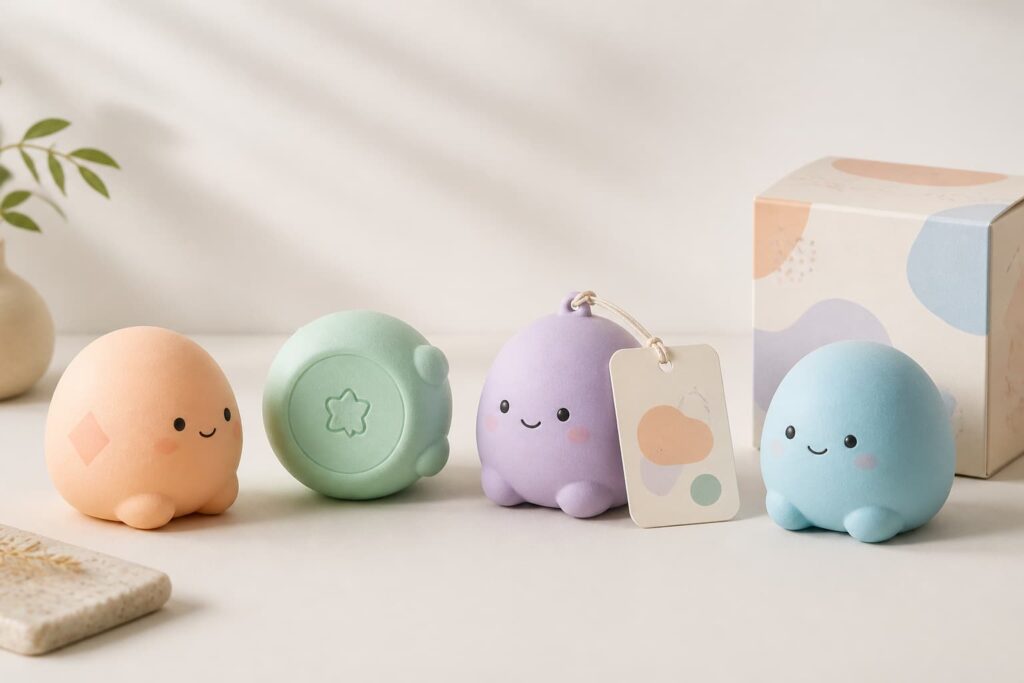
A branding decision can affect the toy design, mold, artwork, packaging and sample approval process. It should therefore be discussed at the beginning of the project rather than added after the product sample is complete.
Important questions include:
- Will the logo appear directly on the toy or only on the package?
- Is the product surface flat enough for a clear mark?
- Does the material stretch or deform significantly?
- How many colors are included in the artwork?
- Will the logo remain readable at a small size?
- Does the retail channel require labels, barcodes or product information?
- Should the branded element be permanent or easy to update?
Answering these questions early helps the manufacturer evaluate which option is practical for the specific shape, material and order.
Four Ways to Brand Custom Squishy Toys
1. Direct Surface Printing or Painted Marks
A simple symbol or logo may sometimes be applied directly to the toy surface. This can make the brand visible even when the product is removed from its packaging.
Direct surface branding may work best when:
- The artwork is simple and uses limited colors
- The logo area is relatively smooth
- The mark can remain clear at a small size
- The material and surface finish are compatible with the selected process
- A branded sample can be tested before bulk production
The product surface should be evaluated carefully. A highly curved, textured or frequently stretched area can make small artwork difficult to position consistently. Fine lettering may also become difficult to read when the toy is squeezed.
Buyers should not approve direct logo application from artwork alone. Always review the mark on an actual sample.
2. Molded, Embossed or Debossed Branding
A logo or symbol may sometimes be incorporated into the product structure as a raised or recessed mark. This option can create a subtle, permanent brand detail without relying on a separate printed layer.
Molded branding may be useful for:
- Simple brand symbols
- Marks placed on the base or back of the product
- Projects that already require a custom mold
- Buyers who prefer a minimal branded appearance
Very small lettering and detailed artwork may not reproduce clearly in a soft material. The manufacturer should review the line thickness, depth, placement and shape before the mold direction is confirmed.
3. Hang Tags and Product Labels
A hang tag or label can add branding without changing the main toy surface. It can also provide space for information that does not fit on the product itself.
A tag or label may include:
- Brand name
- Product name
- Barcode
- Importer or distributor information
- Warnings or age information
- Collection or character details
This approach may be useful when the toy is small, the surface is difficult to print or the buyer wants to update the branding between collections.
4. Private-Label Packaging
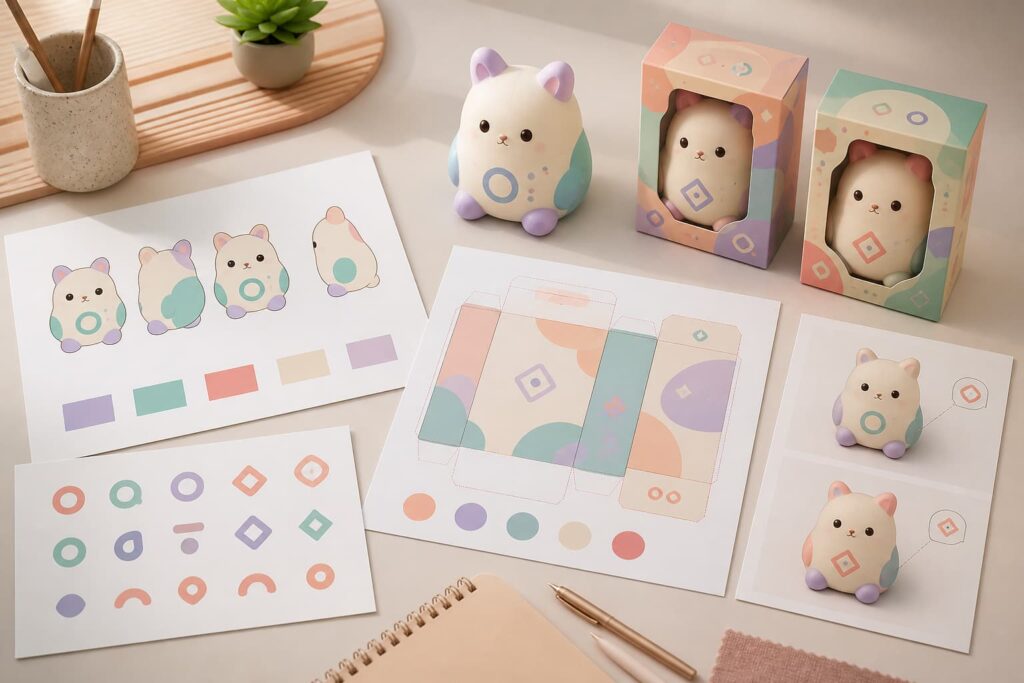
Private-label packaging gives the buyer more room to communicate the brand, product story and retail information. Common options include printed bags, header cards, individual boxes, multi-packs and countertop display boxes.
Packaging can often carry:
- A larger and more readable logo
- Brand colors and visual identity
- Product photography or illustrations
- Barcode and SKU information
- Collection names
- Retail warnings and instructions
- Online or social contact information
For many retail projects, branded packaging can provide greater visual impact than a small logo printed directly on the toy.
Learn more in our custom squishy toy packaging guide.
Direct Product Branding or Branded Packaging?
The best choice depends on how the product will be sold and how buyers will interact with it.
Choose Direct Product Branding When
- The toy may be distributed without a retail box
- The logo should remain visible after the package is removed
- The product includes a suitable smooth branding area
- The artwork is simple and clear
- The branded sample performs well during review
Choose Private-Label Packaging When
- The logo needs to be larger and easier to read
- The product surface is curved, textured or highly flexible
- Retail information needs to appear beside the branding
- The buyer plans multiple products under one visual system
- The package must support shelf display or online fulfillment
Use Both When
Some projects benefit from a subtle mark on the toy and stronger brand communication on the packaging. The toy remains identifiable after opening, while the package carries the full visual and retail information.
The two elements should be designed together so that color, logo size and product presentation feel consistent.
How to Prepare Logo Artwork for a Squishy Toy Project
Clear artwork helps the manufacturer evaluate feasibility and prepare a more useful sample.
Whenever possible, provide:
- Vector artwork or another high-resolution source file
- The preferred logo color
- Pantone references when color accuracy is important
- Minimum and preferred logo width
- Suggested placement on the front, back or base
- A one-color version of a complex logo
- Packaging artwork as a separate file
Avoid sending only a small screenshot. Low-resolution artwork can make edges, spacing and small lettering difficult to evaluate.
Buyers should also confirm that they are authorized to use the supplied brand name, character or artwork.
Choosing the Best Logo Position
The ideal logo position is not always the most visually obvious position. It must also work with the product shape and squeezing action.
Possible locations include:
- A smooth area on the front
- The back of the toy
- The base
- A removable or attached tag
- The individual package
- The display box
When evaluating placement, ask:
- Is the surface flat enough?
- Will the mark cross a seam or textured detail?
- Does the area deform heavily when squeezed?
- Will the logo still be visible in the package?
- Can the logo be positioned consistently during production?
A placement mockup is useful, but the final decision should be based on a physical sample whenever possible.
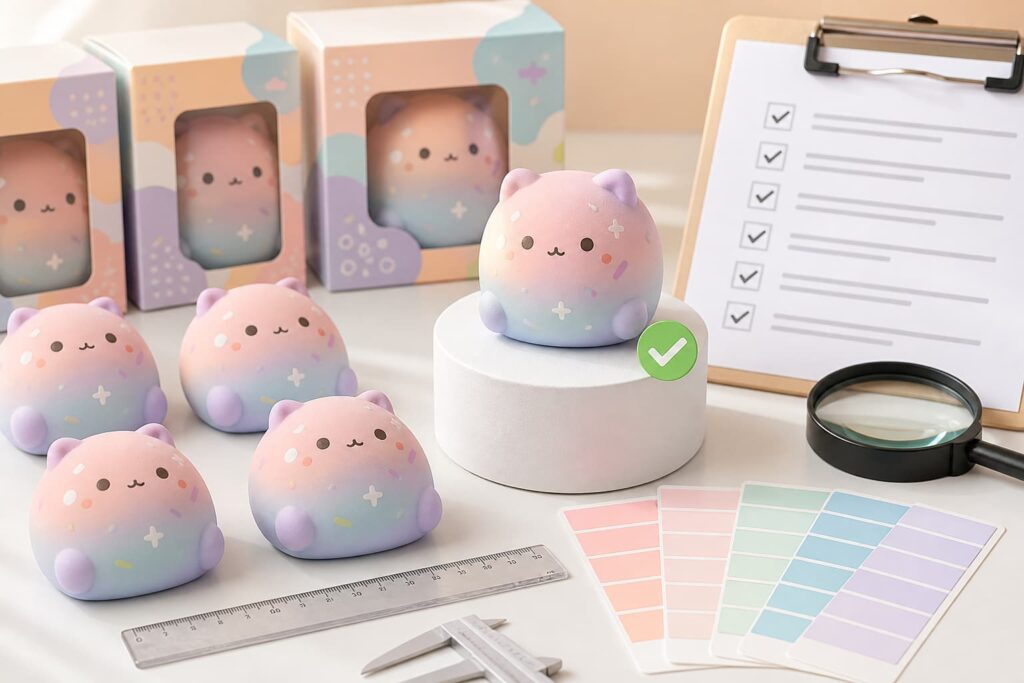
What to Check on a Branded Sample
Before approving bulk production, review both the product and its branding under normal handling conditions.
Check:
- Logo size and position
- Artwork alignment
- Color appearance
- Clarity of small details
- Appearance after repeated squeezing
- Surface condition around the mark
- Contact between the toy and its packaging
- Consistency between product branding and packaging artwork
If a printed or painted mark becomes unclear when the product bends, ask whether the artwork can be simplified, moved or transferred to a tag or package.
Do not rely only on close-up photography. Review the sample from normal retail viewing distance as well.
How Branding Choices Affect Quotation
The branding method can influence project cost and order requirements. Factors may include:
- Number of artwork colors
- Logo size and placement
- Existing product or custom mold
- Material and surface finish
- Printing or marking process
- Tag material and attachment method
- Packaging structure
- Quantity of each design
For a useful quotation, tell the manufacturer whether branding is required on the toy, package or both. A request that simply says “add my logo” does not provide enough information for an accurate project review.
Information to Include in Your Branding Inquiry
Send the following details when requesting a quote for custom logo squishy toys:
- Product reference or preferred design
- Approximate product size
- Material or hand-feel direction
- Estimated order quantity
- Logo artwork
- Preferred logo position
- Number of logo colors
- Packaging requirements
- Target market
- Expected sales channel
If you are unsure which branding method is suitable, send both the product reference and logo file. The manufacturer can then review the available surface area and packaging direction.
For a broader overview of product customization, read our wholesale squishy toy customization guide.
Common Branding Mistakes to Avoid
Using Artwork That Is Too Detailed
A logo that looks clear on a computer screen may lose detail when reduced to a small mark on a curved toy. Prepare a simplified version when necessary.
Choosing Placement Before Reviewing the Shape
The center of the product is not automatically the best logo area. Facial details, texture, curvature and squeezing movement can all affect placement.
Skipping the Branded Sample
An unbranded sample does not confirm how the final logo will look or behave. Review the branded version before approving production.
Leaving Packaging Until the End
Packaging can affect logo visibility, product orientation, barcode placement and carton planning. Discuss it while the product sample is still being reviewed.
Plan Your Custom-Branded Squishy Toy Project
Jinhua Dongyu Toys supports OEM and ODM squishy toy development for brands, gift companies, distributors, promotional programs and retail buyers.
Branding options depend on the product shape, material, surface finish, artwork and packaging direction. Send your product reference, logo file, estimated quantity and target market so the project can be reviewed before sampling.
Explore our squishy toy product directions, review the sampling and production process, or contact Dongyu Toys about a custom logo squishy toy project.
Frequently Asked Questions
Can a logo be printed directly on a squishy toy?
A direct mark may be possible on some products, but feasibility depends on the material, finish, shape, logo detail and available surface area. The result should be confirmed on a branded sample.
What is the best logo method for a soft squishy toy?
There is no single best method. Direct marking may work for a simple logo on a suitable surface, while hang tags or private-label packaging may provide clearer branding for small, curved or highly flexible toys.
Can I use an existing squishy toy with my own packaging?
Some projects can use an existing product direction with customized packaging, labels or display boxes. Availability and order requirements should be confirmed for the selected item.
What logo file should I send to the manufacturer?
Vector artwork is preferred when available. Buyers should also provide the desired color, approximate size, placement and a simplified one-color version if the original logo is complex.
Should I approve a sample with the logo applied?
Yes. A branded sample helps confirm size, position, clarity, color and appearance during normal squeezing and packaging.