Dongyu Insights
Mochi Squishy Toys Wholesale: TPR/TPE Sourcing & Packaging Guide
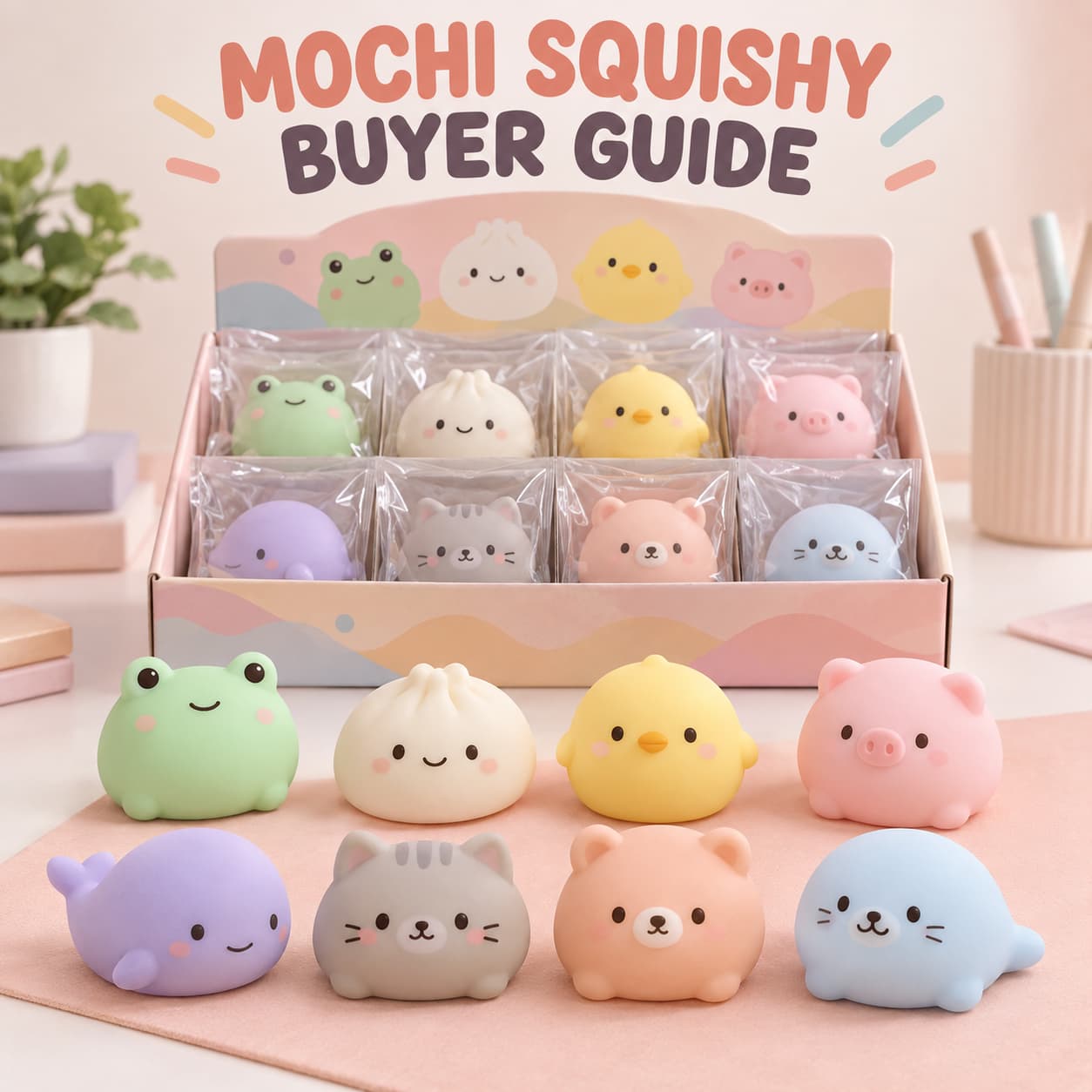
Mochi squishy toys wholesale buyers are not purchasing one universal material or feel. In retail, “mochi squishy” usually describes a compact, soft, elastic character that can be pinched or compressed and returns quickly to shape. Products may be described as TPR, TPE or another elastomer route, but the material name alone does not define softness, surface tack, wall thickness, color, durability or packaging behavior.
Current market listings show a consistent commercial format: small pastel animals, dumplings and food characters sold individually, in four-piece gift sets, random assortments or twelve-count countertop displays. For importers, retailers and private-label sellers, the buying opportunity is clear—but so is the sourcing challenge. Two products with similar photos can feel different, attract different amounts of dust, sit differently in a tray and require different quality controls.
What “Mochi Squishy” Means in a Wholesale Brief
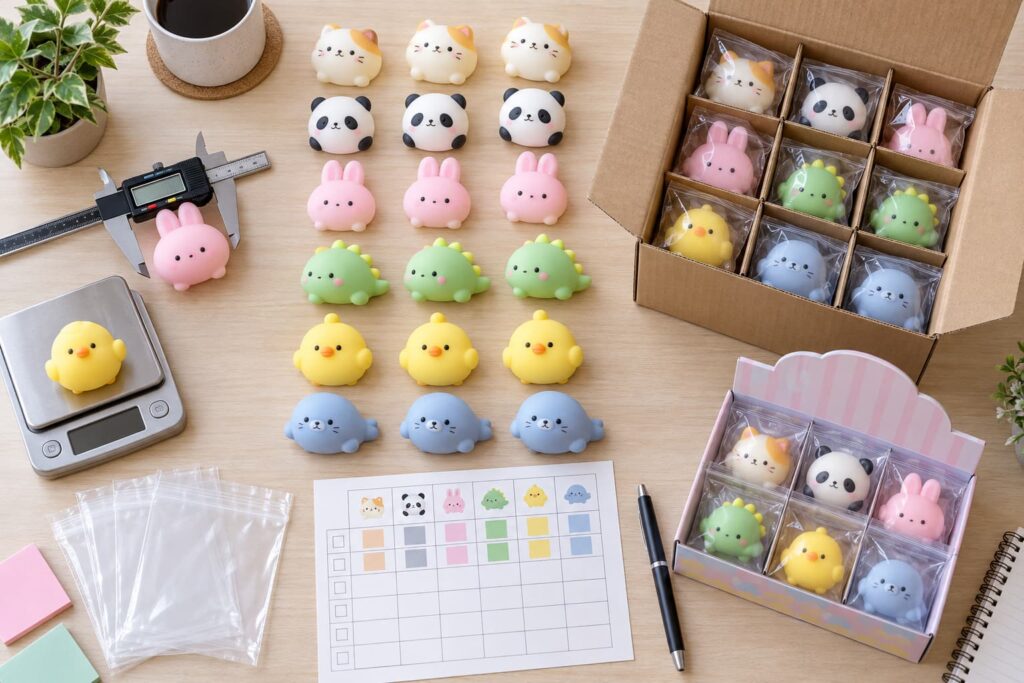
A useful buying brief should translate a consumer term into observable product requirements. Instead of asking only for a “very soft mochi toy,” describe the experience the customer should receive.
Define:
- the intended one-hand squeeze or pinch feel;
- how quickly the product should return after release;
- whether the surface should feel dry, lightly powdered or smooth;
- the acceptable level of surface tack and dust pickup;
- the size, unit weight and wall or solid-body construction;
- the visible seam and acceptable molding appearance;
- the stretch behavior expected during normal intended use;
- the retail package, storage conditions and target market.
This makes the sample a purchasing reference rather than a vague example. Buyers can review Dongyu Toys’ custom squishy toy service and the wholesale customization guide before sending a brief.
Mochi Squishy vs. PU Slow-Rising Squishy
Mochi-style and slow-rising products can both be soft, cute and squeezable, but they create different customer expectations. A compact elastomer mochi figure normally emphasizes smooth deformation, stretch and quick recovery. A PU foam product emphasizes compression followed by a visible, slower rise.
Choose the route according to the retail promise:
- Choose a mochi-style route for small pocket characters, mini animals, counter displays, multi-piece sets and a dense elastic feel.
- Choose PU slow-rise when the rebound time, foam texture, larger bakery shape or video-friendly slow recovery is the main feature.
Do not label both products with the same performance language. If a buyer wants a slow visible return, that requirement should be demonstrated and approved, not inferred from the word “squishy.” A separate article or product page targeting slow-rising wholesale intent should remain focused on PU performance rather than competing with this mochi guide.
Approve Feel Through Physical Samples
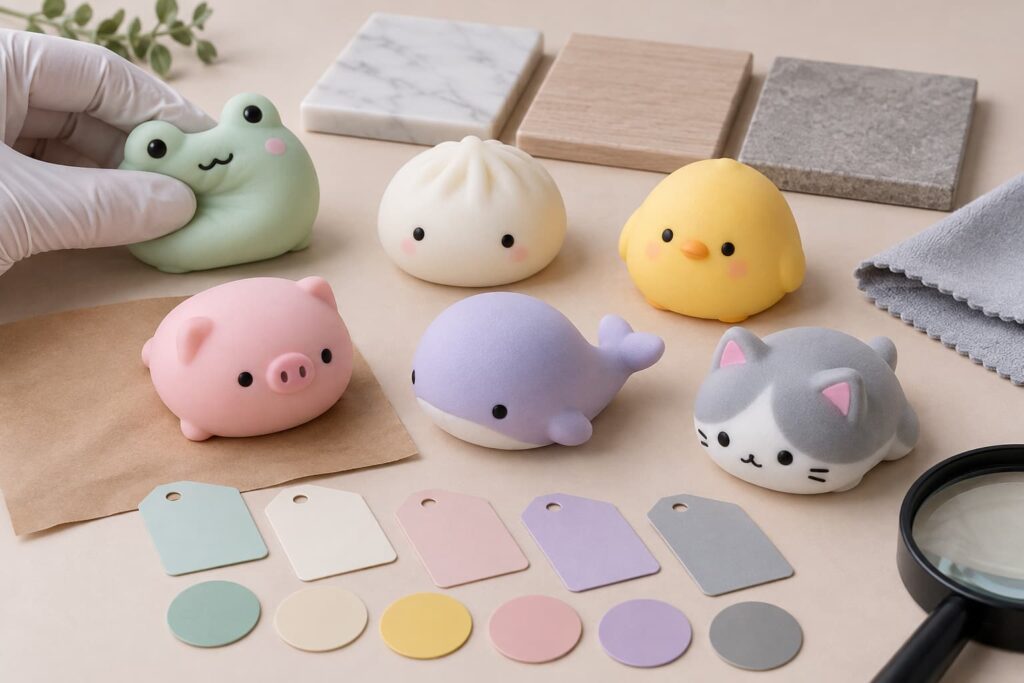
Softness is difficult to communicate through a photograph. Ask for physical samples that represent the intended size, formulation, surface treatment and packaging. Evaluate them in the same sequence so supplier comparisons remain useful.
- Initial touch: note whether the surface feels dry, powdery, smooth, oily or unexpectedly sticky.
- Compression: squeeze the same area with similar hand pressure and compare resistance.
- Recovery: observe whether the shape returns evenly without permanent dents.
- Light stretch: handle only within the intended use and inspect seams or thin projections afterward.
- Resting test: place the sample on clean kraft paper or the proposed insert and look for transfer, sticking or surface change.
- Pack review: seal it in the planned package and recheck feel, odor, appearance and fit after an agreed storage period.
Record the approved sample with a SKU, version, date and photographs. Descriptions such as “premium,” “super soft” or “high quality” are not repeatable specifications. The physical reference and written observations give production and inspection teams something concrete to compare.
Design Shapes for Elastic Material and Retail Scale
Market products commonly use rounded frogs, chicks, pigs, cats, seals, whales, dumplings and other simple silhouettes. This is not only a style choice. Rounded shapes can reduce fragile projections, keep the tactile experience consistent and fit more efficiently into small packs and displays.
For an original OEM character, provide front, side, back and top views plus finished dimensions. Review:
- minimum thickness around ears, fins, tails and feet;
- how deep grooves or folds affect molding and cleaning;
- whether a thin accessory could tear or become a separate part;
- the location and feel of the mold seam;
- flatness or stability when the toy is displayed;
- space for printed eyes, mouth, cheeks or a small brand mark;
- the relationship between product size and retail package volume.
A cute drawing may require simplification before it becomes a robust squeeze product. Ask the manufacturer to identify features that need thickening, rounding or repositioning before the sample mold is approved.
Control Surface Tack, Dust Pickup and Storage
Elastic mochi products can interact with dust, paper, plastic films and neighboring items. The buyer should assess the final product and package together instead of assuming a surface treatment will behave the same in every environment.
During sample review, check whether the toy:
- releases cleanly from the proposed tray, bag or paper insert;
- picks up visible lint during normal handling;
- transfers oil, powder or color to clean packaging materials;
- becomes tackier or deforms after sealed storage;
- sticks to adjacent units in a bulk pack;
- can be cleaned according to accurate, approved care instructions.
Do not make an unsupported “non-sticky” or “dust-proof” claim. Define the agreed sample condition and packaging system. If powder or another surface treatment is used, it should be identified in the product record and considered in the destination-market testing plan.
Plan Color and Facial Decoration as a Series
Mochi assortments often sell through visual variety. A twelve-count display may include several characters or colors, while a four-piece gift box benefits from a balanced palette. Build a series rule before approving individual designs.
Use consistent eye scale, mouth style, cheek position, print color and placement tolerances. Check whether the print remains legible after gentle deformation and returns without obvious cracking or lifting. For very curved faces, the artwork may need to be reduced or repositioned.
Record color references for each SKU and define the assortment ratio. “Mixed colors” is not a complete packing instruction. The purchase order should state how many units of each design belong in an inner pack, display and master carton.
Choose Packaging That Protects the Surface
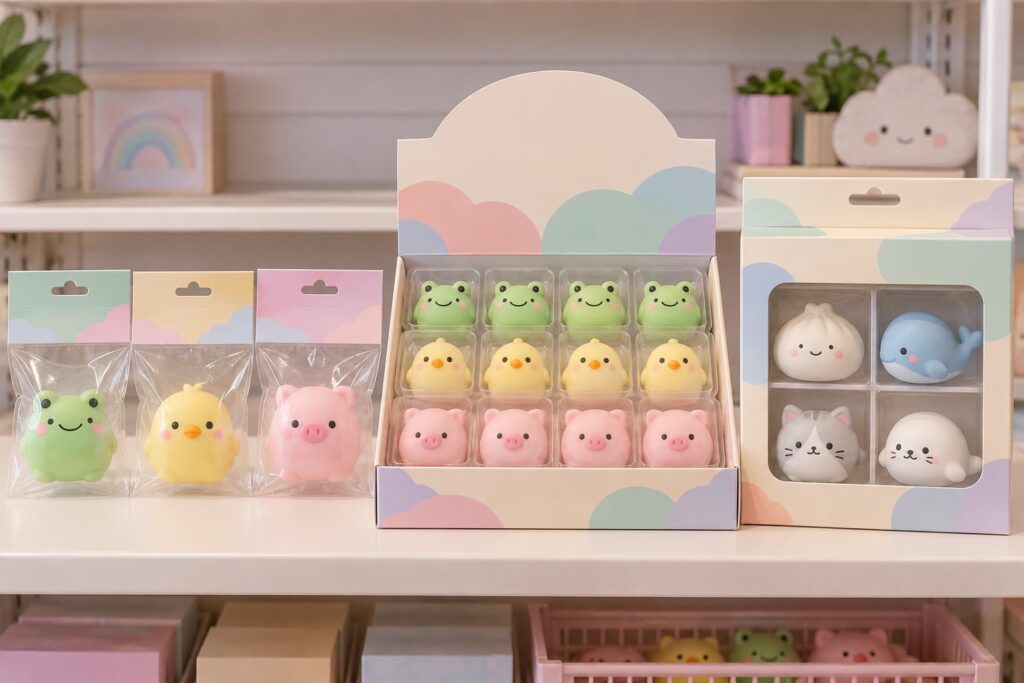
Packaging affects cleanliness, presentation, carton volume and customer handling. Current retail products commonly use individual clear bags, shallow trays in a countertop display, four-piece window boxes and random assortments. Select the format according to the channel.
Individual clear bag with header card
This format keeps the product visible and supports hanging displays. Confirm film, seal, bag size, air management where relevant, header-card strength and warning space. A bag that is too tight can distort the toy; a bag that is too loose can look untidy and increase display volume.
Countertop display with individual trays
A tray or clamshell can separate units and keep the assortment organized. Check how easily each product can be removed, whether the material sticks to the tray, and whether the front lip hides the design. Define the exact character ratio per display.
Four-piece or multi-piece gift box
A window box can present a coordinated set and provide space for brand storytelling. Verify product fit, insert pressure, window strength, barcode area and the way the pack survives the master carton. For e-commerce, compare protective performance and shipping volume as well as shelf appearance.
Required labels, age grading, warnings, responsible-party information and language depend on the product and destination market. Confirm them before artwork approval rather than adding them after printing.
Build a Wholesale Assortment Buyers Can Reorder
A mochi collection should be visually interesting without becoming difficult to replenish. Organize the range around clear roles:
- Core characters: broadly recognizable designs such as a frog, chick, cat or dumpling.
- Color variety: controlled palette changes that do not create an unnecessary new specification for every unit.
- Feature design: one less common shape used to refresh the display.
- Channel pack: individual unit, set, display or random assortment matched to the buyer’s retail model.
Assign each design a buyer SKU and keep the SKU connected to its color, face artwork, product sample and packaging version. Reorder by SKU and ratio rather than asking for “the same cute animals.” This reduces the chance of receiving a visually similar but materially different product.
Inspect Bulk Mochi Squishies Before Shipment
Use the approved sample and written specification during pre-shipment inspection. Check product identity and quantity first, then appearance, feel, packaging and cartons.
A practical checklist includes:
- correct SKU, design, color and assortment ratio;
- dimensions and unit weight using an agreed method;
- softness and recovery compared with the reference sample;
- seam appearance, thin projections and visible deformation;
- unexpected tackiness, oil transfer, residue or strong odor;
- print alignment, adhesion and surface marks;
- bag seals, tray fit, box condition, labels and barcode placement;
- inner quantity, master-carton count, dimensions and marks.
Document the number checked and exact defects found. If a unit tears, leaks, feels oily, has an abnormal odor or differs materially from the approved construction, isolate the issue and investigate before release. The product range can help buyers identify the intended SKU family, but a current approved sample should control the order.
Keep Quality Inspection and Regulatory Testing Separate
A physical inspection can show that production matches a reference; it cannot determine every applicable rule or prove chemical composition. The exact finished toy, materials, pigments, coatings, attachments, packaging, intended age group and destination market determine the required evaluation.
For U.S. children’s products, the CPSC Children’s Product Certificate guidance explains the importer or domestic manufacturer’s certification responsibility and the need to connect the certificate to the covered product. CPSC’s 2026 squishy safety alert also warns buyers and consumers about unknown manufacturers, missing information, leakage, abnormal odor and unusually sticky or oily products.
Ask a qualified laboratory or compliance professional to define the correct scope for the selected product. Do not rely on a generic test report, an unrelated material certificate or a logo printed on packaging.
Compare Quotations Using the Complete Pack-Out
Unit price alone does not show the commercial difference between suppliers. Compare the same approved construction and packaging format. Request:
- exact product model, size, unit weight and material description;
- number of designs and quantity by design;
- sample and custom tooling route where applicable;
- individual package and display configuration;
- units per inner pack and master carton;
- carton dimensions, gross weight and packing method;
- artwork, barcode and label responsibilities;
- testing and documentation assumptions for the target market;
- delivery term, destination and required arrival window.
A larger window box or deeper tray may improve presentation but increase storage and freight volume. Compare landed-cost inputs only after the pack-out is defined.
Frequently Asked Questions
Are mochi squishy toys always made from TPR?
No. “Mochi squishy” is a market description, not a complete material specification. Suppliers may use different elastomer formulations or constructions. Confirm the exact product version, physical sample and applicable testing scope.
Are mochi squishies the same as slow-rising squishies?
Usually not. Mochi-style products commonly feel denser and more elastic with quicker recovery, while PU foam is used when slow visible rise is the key feature. Approve the intended behavior with samples.
How can buyers reduce dust pickup?
Evaluate the surface treatment and the final packaging together. Test contact with the proposed bag, tray and insert, then approve cleaning or care instructions that are accurate for the product. Do not promise a dust-proof surface without evidence.
Which packaging works best for wholesale mochi toys?
Individual bags suit hooks and impulse sales, trays and countertop displays organize mixed assortments, and window boxes suit coordinated gift sets. The best choice depends on shelf format, protection, labeling space, freight volume and channel.
What should a buyer send for a custom mochi squishy quotation?
Send the target shape, dimensions, reference feel, color palette, quantity by design, packaging format, destination market, intended age group, artwork status and required arrival date. State which features are essential and which can be adjusted for manufacturability.
Develop a Market-Ready Mochi Squishy Range
Dongyu Toys supports custom squishy discussions for wholesalers, importers, retailers and private-label sellers. Share your character references, preferred tactile experience, size, color assortment, packaging concept, target market and quantity plan. The team can review the brief and clarify the sampling and packing decisions needed for a quotation.
Ready to plan a wholesale mochi collection? Review Dongyu Toys products or send your custom mochi squishy inquiry.