Dongyu Insights
How to Choose a Custom Squishy Toy Manufacturer
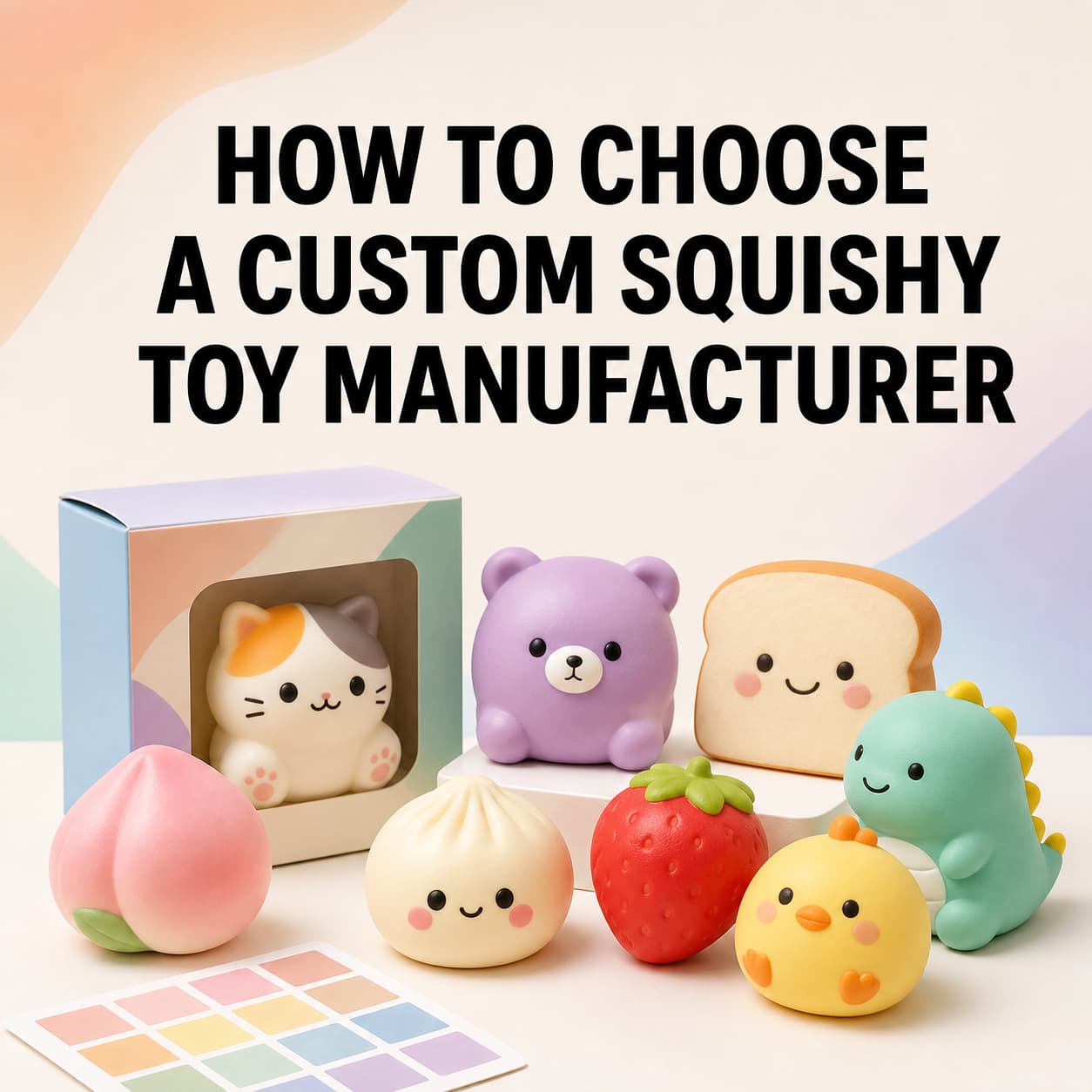
Choosing the right custom squishy toy manufacturer affects much more than the unit price. The manufacturer must understand your product idea, material requirements, target market, packaging plan and expected order quantity.
For importers, toy brands, gift companies and online sellers, the best supplier is usually the one that can turn an initial concept into a consistent, retail-ready product—not simply the company offering the lowest quotation.
This guide explains what wholesale buyers should compare before starting a custom squishy toy project.
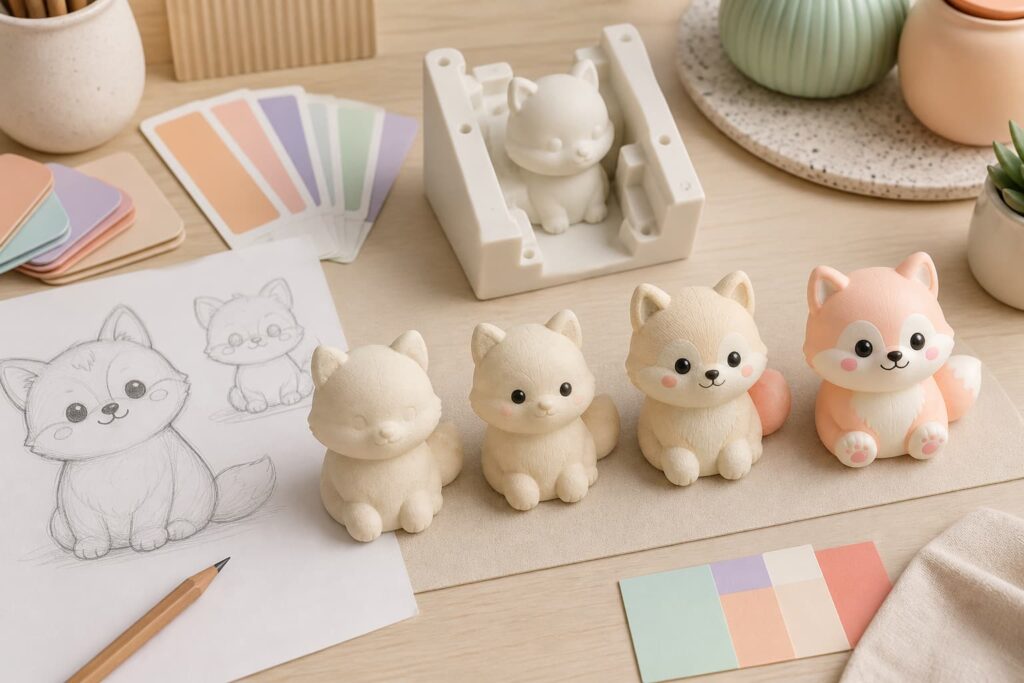
1. Define the Product Before Requesting a Quote
A manufacturer can provide a more accurate quotation when the product requirements are clear. Your initial inquiry should include:
- Product shape or reference image
- Approximate dimensions
- Preferred material
- Desired softness or rebound speed
- Color and surface finish
- Logo or printed artwork
- Packaging format
- Estimated order quantity
- Target country or sales market
If the design is still at an early stage, a sketch, photo or similar product reference is usually enough to begin discussing feasibility.
You can review our custom squishy toy development options before preparing your inquiry.
2. Check the Manufacturer’s Material Experience
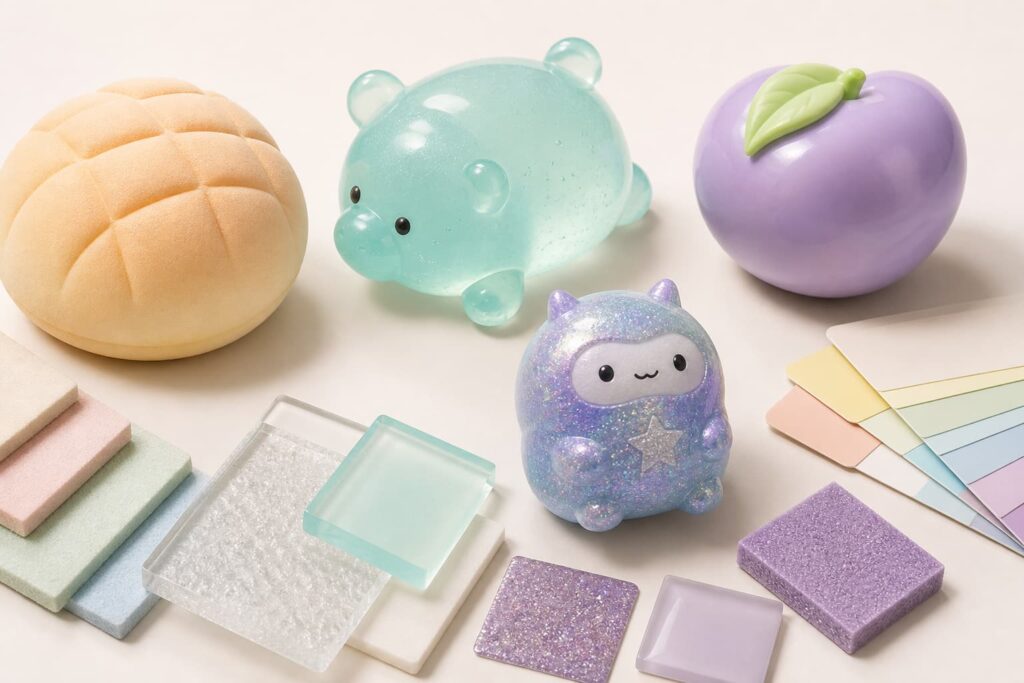
Different squishy toy materials create different tactile effects. Slow-rising PU foam is commonly used when buyers want a lightweight toy that compresses and gradually returns to its original shape. TPR and TPE materials can provide a softer, more elastic or gel-like feel.
The correct material depends on:
- The intended squeezing experience
- Product shape and wall thickness
- Surface texture
- Durability requirements
- Target age group
- Destination-market requirements
- Packaging and storage conditions
A capable squishy toy factory should explain which material is practical for the design instead of applying the same solution to every project.
Read our guide to choosing squishy toy materials for a more detailed comparison.
3. Ask What Can Be Customized
Customization is not limited to changing the product color. Depending on the product and production method, buyers may be able to customize:
- Shape and dimensions
- Softness and rebound speed
- Pantone-matched colors
- Printed faces or patterns
- Glitter, translucent or matte finishes
- Scent
- Brand logo
- Labels and warning information
- Individual bags, boxes or display packaging
When comparing manufacturers, ask which features require a new mold and which can use an existing design. Using an existing mold with customized colors or packaging can sometimes provide a simpler starting point than developing a completely new shape.
4. Confirm the Sampling Process
Sampling is one of the most important steps in a custom project. A sample allows the buyer to check:
- Overall shape and dimensions
- Softness and hand feel
- Rebound performance
- Color accuracy
- Surface finish
- Printing position
- Packaging size and presentation
Provide consolidated feedback whenever possible. Repeatedly changing the shape, color and packaging at different stages can extend the development schedule.
Before approving production, confirm which sample represents the final standard. Keep photos, measurements and approved artwork together so both sides can refer to the same version.
Our custom production process shows the main stages from initial brief to production.
5. Understand MOQ and Cost Factors
There is no universal minimum order quantity for every custom squishy toy. MOQ can change according to:
- Existing or newly developed mold
- Material formulation
- Number of colors
- Printing method
- Product size
- Packaging type
- Number of designs in the assortment
- Production complexity
Buyers should avoid comparing quotations based only on the final unit price. Confirm what each quotation includes, such as mold charges, sample costs, printing, individual packaging, display boxes and export cartons.
A slightly higher unit price may represent a more complete specification or stronger packaging rather than simply a more expensive supplier.
6. Review Packaging Early
Packaging should be discussed before mass production, not after the toys are finished. The package can affect:
- Product presentation
- Label placement
- Warning information
- Barcode position
- Carton quantity
- Shipping volume
- Retail display
- Protection during transportation
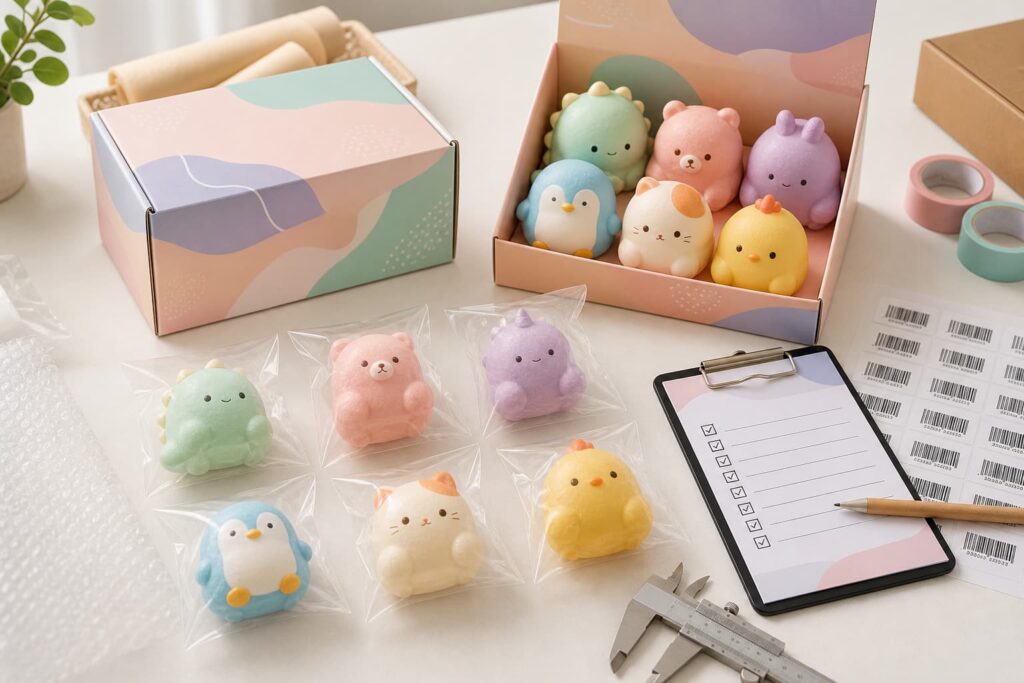
Common options include individual bags, printed header cards, color boxes, multi-packs and countertop display boxes.
If the product will be sold online, consider how the packaging will look in product photography and whether it can protect the toy during parcel delivery.
For more planning details, see our custom squishy toy packaging guide.
7. Discuss Quality Control Standards
Before placing an order, define which details will be checked during sampling and production. Important inspection points may include:
- Dimensions and weight
- Color consistency
- Surface cleanliness
- Printing alignment
- Visible defects
- Rebound performance
- Packaging accuracy
- Carton labels and quantities
For assorted products, confirm the number of colors or designs included in each inner box and export carton. Clear inspection expectations reduce misunderstandings and make approval more objective.
8. Confirm Requirements for the Target Market
Toy requirements can vary according to the destination market, product category, material, function and intended age group.
Buyers should tell the manufacturer where the product will be sold and request documentation relevant to the exact product—not simply a general certificate belonging to another item.
Also confirm:
- Required package warnings
- Label language
- Importer information
- Barcode requirements
- Age grading
- Testing responsibilities
- Document availability
The final compliance plan should be confirmed before production and packaging artwork approval.
9. Evaluate Communication Quality
Good communication is especially important for custom manufacturing. A reliable supplier should ask practical questions about:
- Product dimensions
- Material and softness
- Quantity
- Packaging
- Target market
- Budget range
- Delivery expectations
Be cautious when a supplier gives a final quotation without confirming the basic specification. A fast price is not necessarily an accurate price.
The best working relationship is one where both sides document decisions, confirm changes and approve samples before production begins.
Questions to Ask a Squishy Toy Manufacturer
- Can you produce this shape and material?
- Does the project require a new mold?
- What information is needed for sampling?
- What factors determine the MOQ?
- Which colors and finishes are available?
- Can the logo and packaging be customized?
- How will the production sample be approved?
- What quality checks are performed?
- What export packaging options are available?
- Which documents can be provided for the target market?
The answers will help you compare suppliers based on capability and project fit rather than price alone.
Start Your Custom Squishy Toy Project
Jinhua Dongyu Toys supports OEM and ODM squishy toy development for brands, importers, distributors, gift companies and retail programs.
We can discuss custom shapes, colors, softness, surface finishes, packaging and sampling based on your product direction.
To receive a practical project review, send us:
- A sketch or reference image
- Preferred size
- Estimated quantity
- Packaging idea
- Target market
- Expected delivery schedule
Contact Dongyu Toys to discuss your next custom squishy toy project.
Frequently Asked Questions
Can a squishy toy be made from a reference image?
A reference image or sketch can be used to begin evaluating the shape, structure, material and sampling requirements. Final feasibility depends on the design details.
Can I customize only the packaging?
Yes. Some projects can use an existing product design with customized labels, bags, boxes or display packaging. This may be simpler than developing a completely new mold.
What determines the MOQ for custom squishy toys?
MOQ depends on the material, mold, size, colors, printing, packaging and number of designs. The manufacturer should review the full specification before confirming it.
Should I approve a sample before production?
Yes. Sample approval helps confirm the shape, dimensions, feel, color, printing and packaging before mass production begins.
What should I include in my first inquiry?
Send the product idea, size, quantity, target market, packaging requirements and any reference images. These details help the manufacturer provide a more useful response.