Dongyu Insights
Custom Scented Squishy Toys: Fragrance, Sampling & Packaging Guide
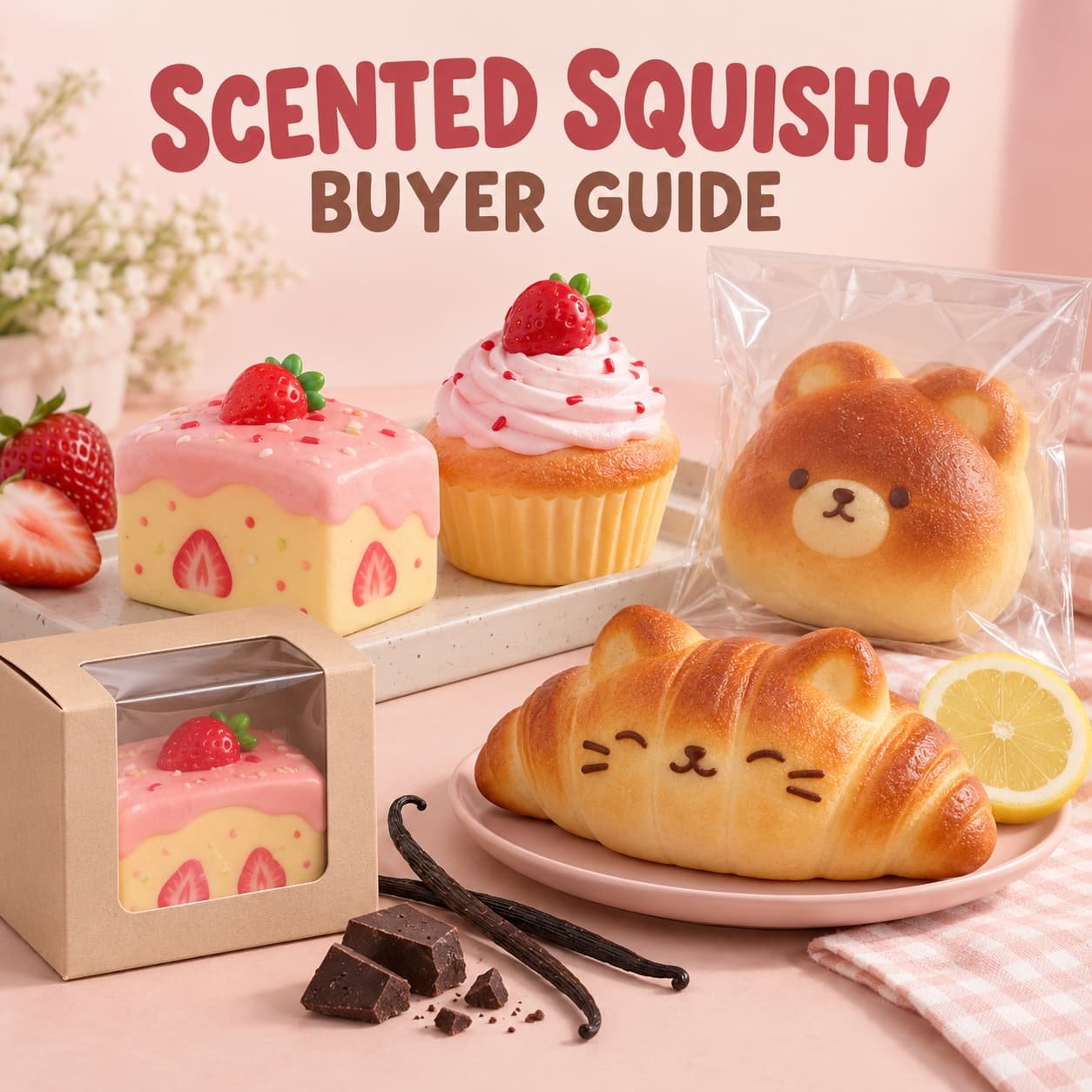
Scent can make a strawberry, cupcake, bread, or fruit squishy feel more complete, but it also adds a specification that cannot be approved from a product photo. Two samples may look identical while smelling very different after a day in a sealed bag. One fragrance may support the design, while another feels too strong, changes during storage, or creates questions about documentation and target-market requirements.
For wholesale and OEM buyers, custom scented squishy toys should be developed through the same disciplined process as color, softness, surface finish, and packaging. The buyer needs an exact scent reference, a finished physical sample, a realistic package evaluation, and records tied to the final product version. This guide explains how to make those decisions without treating a pleasant smell as proof of safety or compliance.
First Decide Whether Scent Adds Commercial Value
Fragrance works best when it strengthens a clear product idea. A strawberry cake with a light strawberry direction is easy for a customer to understand. A bakery animal may suit vanilla, bread, butter, or cocoa notes. A generic animal or promotional mascot may not need fragrance at all.
Unscented can be the better option when scent is not central to the concept, the sales channel serves fragrance-sensitive customers, the buyer wants fewer approval variables, or the target market creates extra documentation or labeling work. “Unscented” should still be checked on the finished packed sample because foam, coatings, inks, adhesives, and packaging can each have their own odor.
Use the sales channel to guide the choice:
- Collectible and gift retail: scent can support a themed series and unboxing experience.
- Food-shaped impulse products: a recognizable scent direction can reinforce the visual design.
- Promotional products: fragrance should support the campaign rather than compete with the logo or message.
- Classroom, office, and general sensory assortments: an unscented option may reach a wider audience.
- Online sales: product descriptions must set accurate expectations because the shopper cannot smell a sample.
Write a Scent Brief Before Requesting Samples
A request such as “make it smell like strawberry” is not a complete specification. Strawberry can be fresh, candy-like, creamy, jam-like, or mixed with vanilla. The supplier may choose a reference that is reasonable but different from the buyer’s expectation.
A practical scent brief should state:
- the product shape, colorway, and material direction;
- the intended scent family and one or two descriptive words;
- whether the direction should feel fresh, creamy, baked, fruity, or candy-like;
- the preferred intensity relative to an approved physical reference;
- the intended age presentation, destination market, and sales channel;
- the final unit packaging and expected sealed storage conditions;
- any customer or retailer restrictions that must be reviewed;
- the documents the buyer needs from the supplier and fragrance source.
Reference materials help, but do not send an actual food item and assume it can be copied exactly. Food aroma changes with freshness, temperature, and preparation. A labeled fragrance blotter or an existing approved consumer-product reference can be more repeatable, provided both parties identify the exact version.
Match the Scent to the Product Without Copying a Competitor
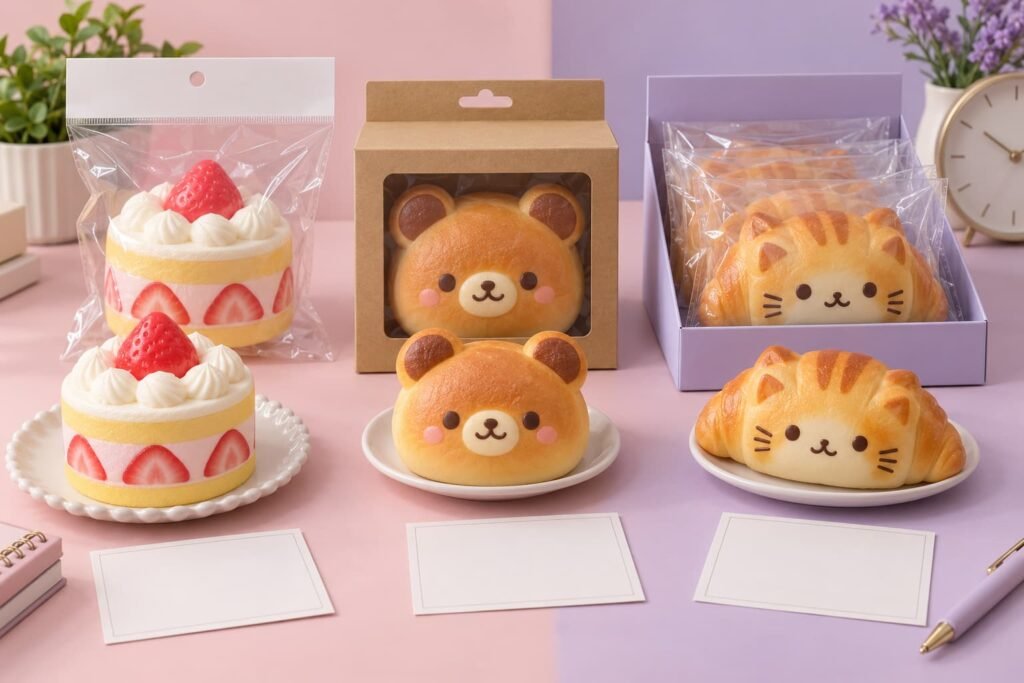
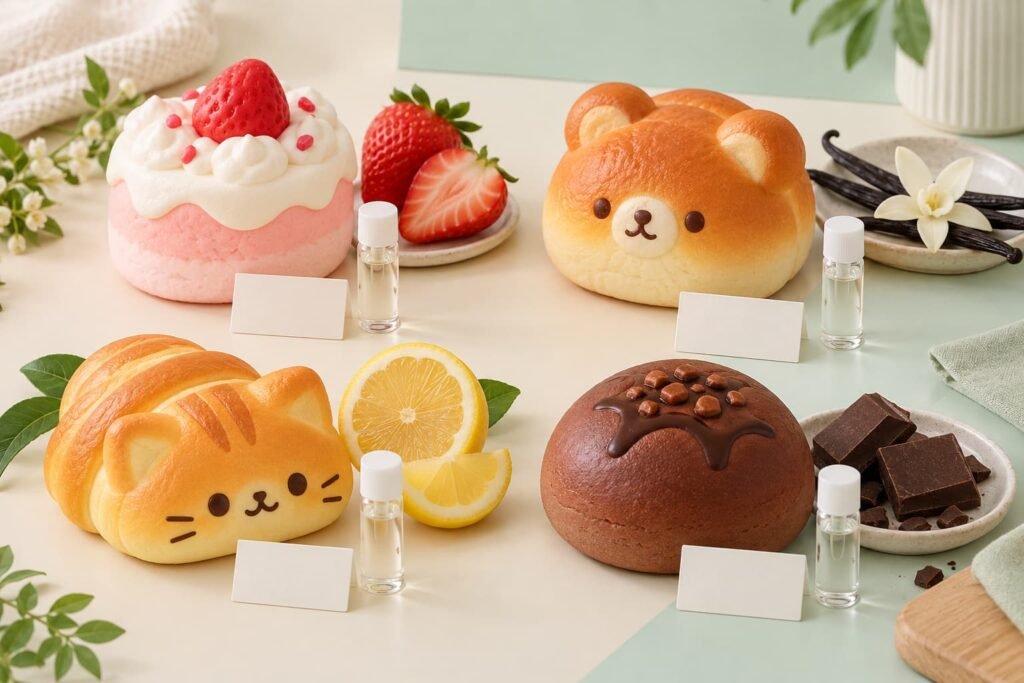
Market products show familiar pairings such as strawberry with pink cake, vanilla with cream bread, cocoa with chocolate buns, and citrus with bright fruit forms. Buyers can use these category conventions without copying another brand’s character, packaging, fragrance name, or artwork.
Build an original direction from three layers:
- Visual promise: What does the shape and color make the customer expect?
- Scent character: Which note supports that expectation without becoming confusing?
- Brand role: Is fragrance the hero feature, a light supporting detail, or unnecessary?
A collection does not need one scent per color. Too many fragrance variants increase sample comparison, artwork control, inventory complexity, and quality checks. For a first order, a smaller scent architecture can be easier to manage: one signature scent across a coordinated series, or a limited set of clearly different notes.
Understand the Product Version Being Quoted
Fragrance may be incorporated through different material or surface approaches depending on the squishy construction and the supplier’s process. Buyers should not assume that a method used for one PU foam item also applies to TPR, TPE, silicone, coatings, or filled products.
Ask the supplier to identify the proposed construction and where the fragrance is introduced. Then confirm whether it can affect cure, softness, rebound, color, coating adhesion, tack, or package odor. The answer should be tied to the actual sample, not a generic statement about all scented toys.
Any change in fragrance, dosage direction, foam formula, coating, colorant, or package should be reviewed as a new revision. A visually identical fragrance mixture is still a material change from the buyer’s perspective and may require renewed documentation or testing decisions.
Approve the Scent on a Finished Physical Sample
Scent is subjective, so approval needs structure. A useful review separates identity, intensity, off-odor, and product performance.
1. Confirm sample identity
Label the product, revision, fragrance reference, packaging state, and review date. If several colorways share one scent, specify whether the approval covers all of them or only the sampled version.
2. Compare under the same conditions
Do not compare one sample immediately after opening and another after hours of airing. Use consistent sealed time, opening method, room conditions, and review interval. Avoid judging many strong samples in one session without breaks, because perception can become less reliable.
3. Separate scent character from strength
A fragrance can match the concept but be too intense, or have the right strength but the wrong character. Record both decisions. Use plain descriptions rather than unsupported numerical claims.
4. Check the whole product
Squeeze the toy, observe recovery, inspect the surface, and check whether the fragrance direction changes the perceived quality. Look for unexpected tack, color shift, coating damage, or persistent packaging odor. Fragrance approval does not replace the normal product checklist.
5. Keep a controlled reference
Retain the approved sample and written comments under one revision. A photo cannot preserve scent. If the physical reference changes during storage, the buyer and supplier should agree how the current production reference will be maintained.
Evaluate Scent in the Actual Packaging
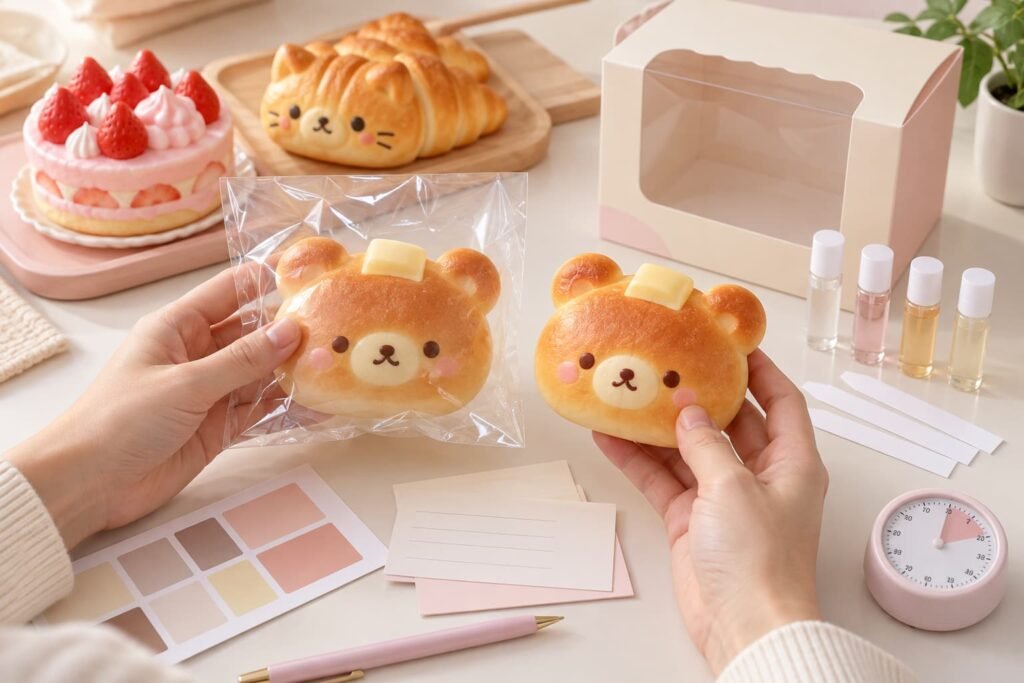
A scent that seems light in open air may feel much stronger after the product has been sealed. Bags, window boxes, printed cards, adhesives, and inserts can also contribute odor. That is why the complete packed unit should be reviewed before bulk production.
Use the proposed bag size, box, insert, printed components, and sealing method. After an agreed storage period, check:
- the first odor when the package opens;
- whether the intended note is recognizable;
- whether packaging odor competes with the fragrance;
- whether scent appears to transfer to cards or adjacent items;
- whether the product surface remains dry, clean, and undamaged;
- whether compression changes shape or recovery;
- whether the unboxed experience remains acceptable after airing.
For mixed-scent displays, consider separation. Multiple fragrances stored in one display or master carton may blend, especially when primary packaging is not fully sealed. Test the planned assortment rather than assuming each SKU will remain isolated.
Fragrance Documents Do Not Replace Toy Compliance
A buyer may request information from the fragrance supplier, such as a safety data sheet and an IFRA conformity document for the intended use where applicable. However, IFRA explains that its Standards are a voluntary risk-management system, that a conformity certificate is prepared by the fragrance mixture supplier rather than issued by IFRA, and that it does not replace a safety assessment or local legal compliance.
Age and foreseeable use matter. IFRA guidance distinguishes toys where mouth contact is likely from those where it is not, and applicable national or regional toy rules still control the final product. In the European Union, official toy legislation includes restrictions and labeling provisions for allergenic fragrances, and the Toy Safety Regulation entered into force on January 1, 2026. Requirements and transition details should be checked for the exact product and placing-on-market date.
For the United States, the Consumer Product Safety Commission states that applicable sections depend on the specific toy. Children’s products subject to safety rules require appropriate third-party testing and certification. A fragrance document, pleasant smell, or internal odor check is not a Children’s Product Certificate and does not demonstrate compliance with every applicable requirement.
Provide the testing laboratory or qualified compliance professional with the final material, fragrance, color, coating, packaging, age positioning, and destination-market information. Do not rely on a test report for an unscented or materially different version without a documented applicability review.
Control Scent Consistency in Bulk Production
Bulk quality control should compare production pieces with the approved finished sample and specification. Because human perception varies, the plan should avoid vague instructions such as “smells good.” Define who reviews, which package state is used, when the package is opened, and what constitutes an unacceptable result.
Useful production checks can include:
- correct SKU, revision, and fragrance identity;
- consistent scent character across selected pieces;
- no clearly missing, wrong, or unusually strong fragrance;
- no unexpected chemical, burnt, sour, or packaging-dominant odor;
- acceptable surface, color, softness, and recovery;
- correct individual packaging and assortment separation;
- traceable material and production records;
- required destination-market documents tied to the final version.
Record outliers instead of hiding them inside an average. If a carton or production segment differs clearly, isolate the issue and investigate the affected scope. The buyer and supplier should agree the inspection basis before production begins.
Build a Quote-Ready Scented Squishy RFQ
Send the supplier a focused brief containing:
- reference shape or artwork and target dimensions;
- PU, TPR, TPE, or other material direction if known;
- scent family, descriptive direction, and intensity reference;
- surface finish, colors, logo, and printed details;
- unit packaging, display format, and assortment plan;
- quantity by design, color, and scent;
- destination country, sales channel, and intended age presentation;
- requested sample stages and approval records;
- required fragrance, material, and toy-compliance documentation;
- questions about shelf storage, packaging interaction, and bulk QC.
Do not assume another project’s MOQ, price, test report, or lead time applies. Fragrance, packaging, and variant count can change the quotation basis. Dongyu Toys’ wholesale customization guide and custom production process explain the wider OEM/ODM workflow.
FAQ About Custom Scented Squishy Toys
Are scented squishy toys always better for food shapes?
No. Scent can support a food concept, but an unscented product may be more suitable for the customer group, channel, documentation plan, or first-order complexity. Make the decision from the commercial brief and finished sample.
Can a buyer approve fragrance from a written name?
A name such as “vanilla” is not specific enough. Approve the exact physical sample or controlled fragrance reference, along with an intensity direction and final packaging state.
How strong should the scent be?
There is no universal strength. It should match the concept, package, target customer, and applicable requirements. Use an approved sample and consistent review method rather than inventing an unsupported number.
Should scented products be tested in a sealed bag?
Yes, if that is the intended retail package. Sealed storage can change the opening experience and reveal interactions between the product, film, ink, card, adhesive, and fragrance.
Does an IFRA conformity document prove the toy is compliant?
No. IFRA states that its system is voluntary and that conformity documentation does not replace safety assessment or legal compliance. The final toy must be reviewed against the applicable requirements of its destination market.
Can several scents share one display carton?
They can, but the complete assortment should be sampled in its planned primary packaging and display. Check whether fragrances mix or transfer during storage and transport.
Develop Scent as a Controlled Product Feature
A successful scented squishy connects the visual design, fragrance direction, material, surface, packaging, documentation, and quality plan. Treat scent as a controlled specification—not a last-minute additive or a claim based on one attractive sample.
To discuss a custom scented or unscented squishy project, send Dongyu Toys your product idea, target material, quantity, destination market, scent direction, and packaging concept. Explore the squishy toy range, review custom service options, or request a sample and quotation.