Dongyu Insights
Slow-Rise Squishy Recovery Time: A Buyer’s Measurement & QC Guide
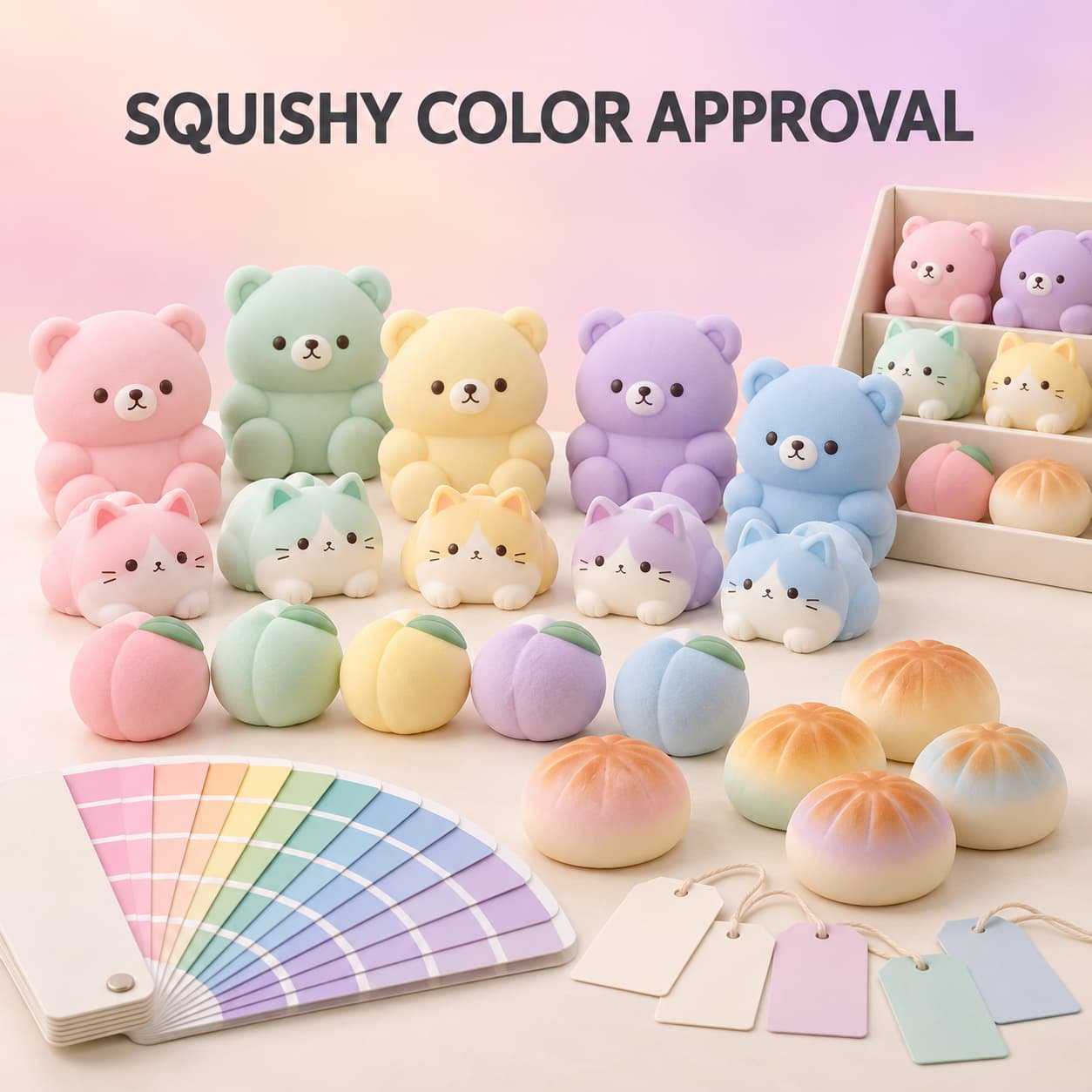
When a buyer asks for a “slow-rising” squishy, the phrase sounds precise but is actually open to interpretation. One supplier may count until the toy looks mostly normal. Another may wait until the deepest crease disappears. A buyer may squeeze a sample by hand for two seconds, while an inspector may use a different force, direction, or hold time. The same product can produce different results under each method.
For wholesale and OEM projects, slow-rise squishy recovery time should be treated as a repeatable product-performance reference—not a dramatic number copied from a marketplace listing. A useful specification connects the approved physical sample with a simple measurement method, an acceptable recovery window, and visible failure limits. This guide explains how importers, retailers, private-label brands, and online sellers can build that reference without confusing it with regulatory testing.
What Does “Recovery Time” Mean for a Squishy Toy?
Recovery time is the period between releasing a compressed squishy and reaching an agreed endpoint. The endpoint matters as much as the stopwatch. It could mean that the product has regained a defined percentage of its original height, returned to the approved visual profile, or no longer shows a major dent.
Those endpoints are not interchangeable. A thick bakery squishy may regain most of its height quickly but need longer for small wrinkles to relax. A tall cake slice may stand upright before one corner fully recovers. A round animal may look normal from the front while the back is still flattened. Write down what “recovered” means for the actual design.
Recovery time is also different from softness. Two samples can take a similar time to recover but require different squeeze force. Likewise, a very soft foam can return quickly, while a firmer design can recover slowly. Buyers should approve both hand feel and recovery behavior instead of using one number as a substitute for the whole tactile experience.
Why the Same PU Foam Can Behave Differently
Many classic slow-rising squishies use flexible polyurethane foam, but “PU foam” does not identify one universal feel. The finished behavior reflects the foam formulation, density, cell structure, mixing and curing conditions, product geometry, molded skin, paint system, and recent storage history. The buyer does not need to become a foam chemist; the practical goal is to control the finished product that customers will actually handle.
Formulation and processing
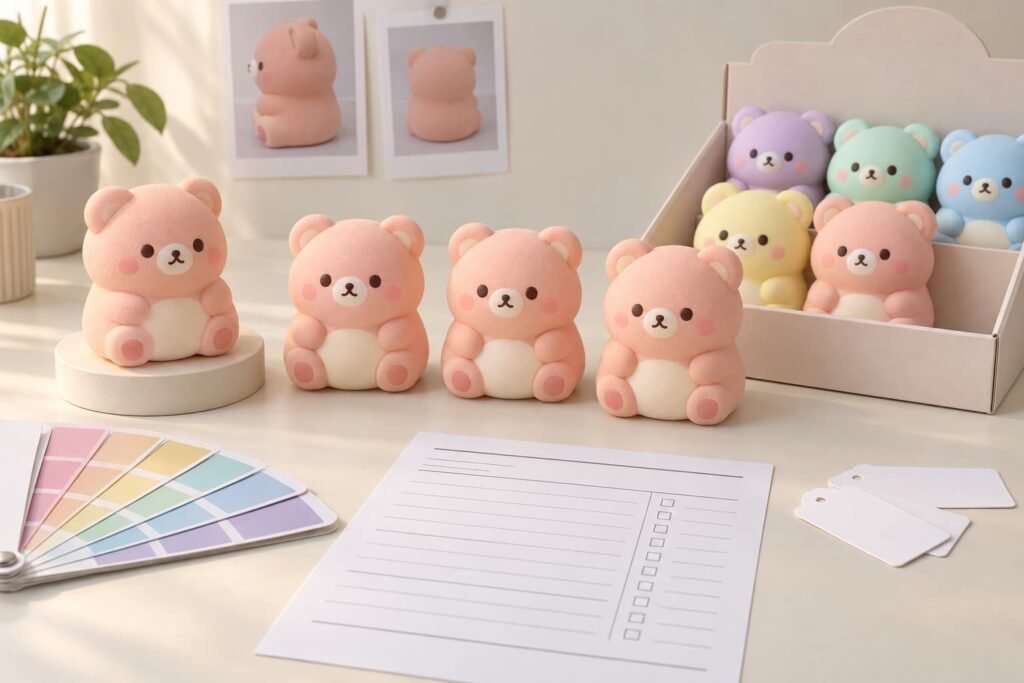
The material system and production conditions influence how the foam compresses and returns. A change that improves one characteristic may affect another, so avoid approving rebound on an unpainted blank and assuming the coated retail item will behave identically. The final sample should use the intended material direction, surface finish, decoration, and packaging configuration.
Shape, thickness, and molded geometry
A compact bun, a hollow-looking donut, a tall cake slice, and a long banana-shaped character distribute pressure differently. Thick sections may recover differently from thin ears, fins, stems, or icing details. Deep undercuts and narrow projections can also hold creases after the central body has recovered. For that reason, do not copy a recovery-time target from an unrelated SKU.
Skin, paint, and surface coating
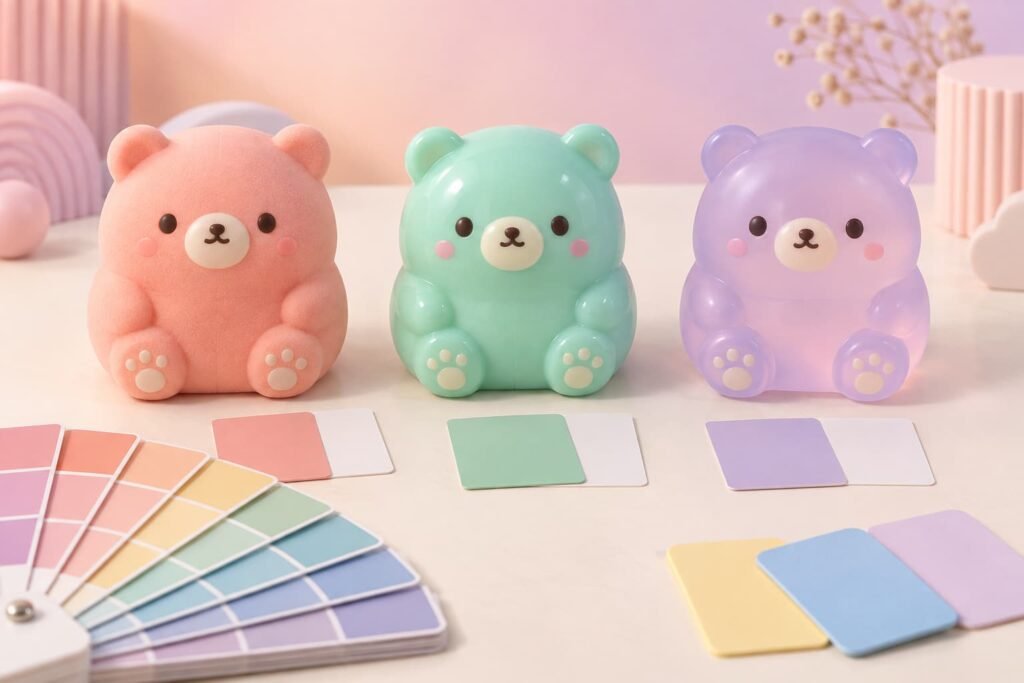
The molded skin and decorative coating move with the foam. A heavier coating, layered airbrushing, printed detail, or flocked zone can change how a surface folds and relaxes. Review cracking, whitening, wrinkling, and tack at the same time as recovery. For finish selection, see the separate custom squishy service overview and confirm the final surface on a physical sample.
Temperature and recent compression
A sample taken directly from a tight package may not behave like one that has rested. Room conditions and recent repeated squeezing can also change the observed result. The solution is not to invent a laboratory claim. It is to use the same practical conditioning and handling method whenever samples or production pieces are compared.
A Practical Buyer Method for Comparing Recovery
The following method is suitable for consistent buyer-side comparison and quality communication. It is not a substitute for a recognized safety test or a qualified laboratory method.
- Identify the exact version. Record the design or SKU, sample revision, material direction, finish, package state, and review date.
- Let samples rest consistently. Remove the items from compression and allow the same rest period in the same general room conditions before comparison.
- Record the original profile. Photograph the front, side, and top. Measure one or two defined height points that are easy to repeat.
- Define the compression. State the direction, approximate depth, hold time, and whether the test uses a hand, flat plate, or simple fixture.
- Release without reshaping. Do not pull, massage, or manually round the product after release.
- Start timing at release. Use the same endpoint for every piece, such as a defined height recovery or the approved visual profile.
- Repeat after a rest interval. One attractive result is not enough. Compare several pieces and more than one cycle without overworking the foam.
- Record appearance failures separately. Note permanent dents, tilted recovery, open tears, coating damage, abnormal creases, or areas that remain collapsed.
A short phone video can support the record, but it should not replace the written method. Camera speed, framing, editing, and playback can make recovery appear faster or slower. Keep the physical approved sample, the written conditions, and the video under the same revision name.
Use a Recovery Window, Not a Single Perfect Second
Finished foam products naturally have variation. A single exact second can create false precision, especially when compression is performed by hand. A more useful production reference is an acceptable window supported by the approved sample and pilot pieces.
The window should be paired with limits that timing alone cannot catch. For example, a piece may return within the agreed window but lean to one side, leave a deep crease, or recover unevenly around a painted detail. The acceptance record can state both the timing basis and the visual result required.
Do not publish a fixed customer-facing recovery claim unless the company has a suitable, controlled method and evidence for the exact product version. Marketing language should match what the approved product can reliably deliver, not the best result from one hand-picked sample.
Separate Softness, Recovery, and Durability
These three attributes influence the experience but answer different buyer questions:
- Softness: How much force does the toy seem to require during a normal squeeze?
- Recovery: How does it return after release, and how long does the agreed endpoint take?
- Durability: Does the product maintain its structure, skin, coating, seams, and attachments through expected handling?
A slow recovery is not automatically a quality advantage. A product that rises very slowly but keeps permanent dents may be less desirable than one with a controlled, smooth return. A soft product that tears around thin details is also not solved by an impressive stopwatch result. Evaluate the complete finished piece.
How Packaging Can Change the Result
Squishies are compressible cargo. A bag, insert, window box, display carton, and master-carton arrangement can apply pressure during storage and transport. If a product is approved loose but shipped tightly packed, the customer may receive a temporarily flattened or permanently distorted item.
Approve the packed unit with the product inside. Check clearance around ears, toppings, fins, stems, and printed faces. Make sure the window or insert does not create one continuous pressure point. Then repeat the recovery comparison after the sample has spent an agreed period in the proposed package.
Packaging can also affect surface condition. A tacky TPR/TPE item may need protection from dust and direct paper contact, while a painted PU surface may be vulnerable to rub marks where it touches a card or window. Product recovery and surface compatibility therefore belong in the same packaging review, even though they are recorded as separate checks.
Turn the Approved Sample Into a Production Reference
The strongest reference combines one labeled physical sample with a concise specification. At minimum, include:
- product name, SKU, and revision;
- overall dimensions and defined measurement points;
- material or construction description confirmed for the project;
- approved softness and hand-feel reference;
- compression direction, depth, hold time, and recovery endpoint;
- acceptable recovery window and visual failure limits;
- color, surface, print, and accessory references;
- unit packaging and display orientation;
- approved photos or video filenames;
- date and responsible approval contact.
Any later material, geometry, coating, or packaging change should trigger a documented review. Whether additional safety testing is required depends on the nature of the change and the target market. The U.S. Consumer Product Safety Commission notes that applicable requirements vary by the toy, and children’s products subject to rules require appropriate testing and certification. Recovery timing is a product-performance check; it does not prove regulatory compliance.
How to Check Consistency in a Bulk Order
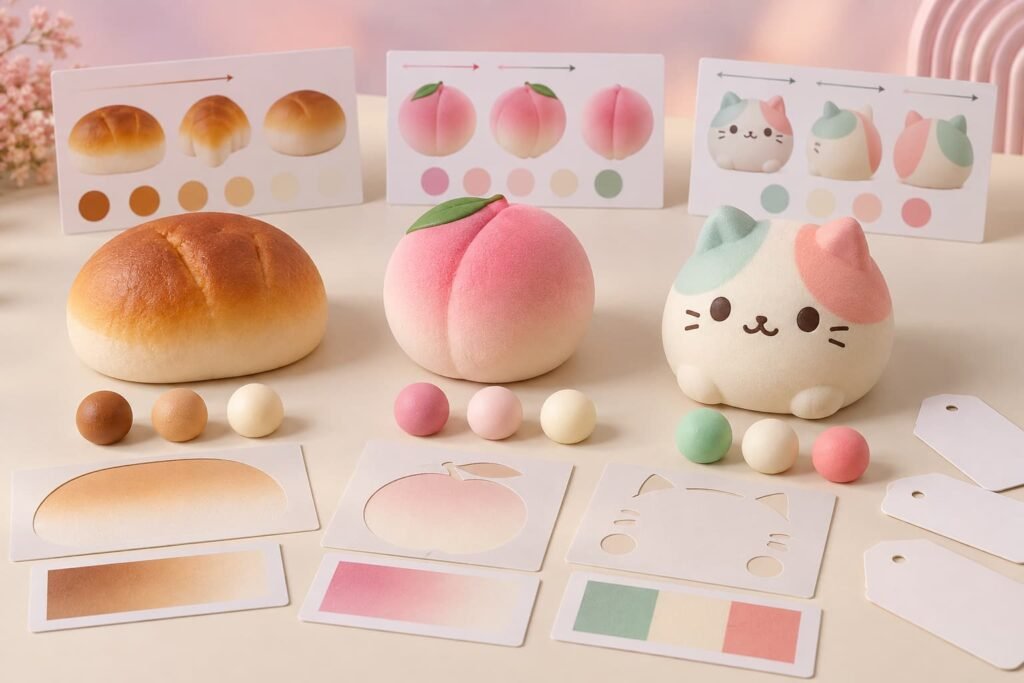
During production review or pre-shipment inspection, use the same written method applied to the approved sample. Select pieces from more than one carton or production position according to the agreed inspection plan. Compare results against the approved window and visual reference, not against an informal memory of how the first sample felt.
Record outliers instead of averaging away obvious failures. A lot can have an acceptable average while a few pieces remain collapsed, recover unevenly, or show damaged coating. Classify timing variation and visible defects separately so corrective action is easier to discuss.
Also compare unit weight, dimensions, and finish where relevant. A shift in those observations can help the supplier investigate why the squeeze experience changed. Buyers should agree the inspection basis before production rather than introducing a new method after goods are complete.
What to Include in an RFQ
A quotation request becomes more useful when it describes the desired experience in observable terms. Send the supplier:
- product shape, approximate size, and intended material direction;
- a reference sample or unedited squeeze-and-recovery video if available;
- the target hand feel and recovery behavior;
- surface finish, color, printing, scent, or accessories;
- retail packaging and display requirements;
- destination market, buyer age positioning, and sales channel;
- estimated quantity and number of designs or colorways;
- questions about sample stages, production controls, and applicable documents.
Do not assume that a target from another product can be copied exactly. Ask the supplier to review feasibility on the proposed size and geometry, then approve the actual finished sample. Dongyu Toys’ custom production process and wholesale customization guide provide the wider project context.
FAQ: Slow-Rise Squishy Recovery Time
What is the best recovery time for a slow-rising squishy?
There is no universal best number. The suitable result depends on the material, shape, size, coating, product positioning, and approved customer experience. Compare physical samples using one repeatable method and set a supported window for that design.
Can I judge recovery from a supplier video?
A video is useful for early comparison, but it cannot fully control compression force, depth, hold time, temperature, editing, or playback speed. Use it to shortlist options, then approve the physical sample and written method.
Does foam density determine recovery speed?
Density can affect mass and feel, but it does not determine recovery by itself. Formulation, cell structure, geometry, skin, coating, processing, and conditioning also matter. Approve the finished product rather than relying on one material number.
Should every colorway be timed?
If colorways share the same controlled construction, one plan may be sufficient, but changes in coating layers, decorative areas, or materials can affect behavior. Define which variations the approved sample covers and review changed constructions separately.
Is a recovery-time check the same as toy compliance testing?
No. Recovery is a buyer-defined performance attribute. Toy compliance depends on the product, intended age, destination market, and applicable rules. Work with qualified parties to identify the correct testing and certification requirements for the exact final product.
When should recovery be rechecked?
Recheck after material, geometry, finish, or packaging changes; during an agreed pre-production or pilot stage; and during bulk inspection under the approved plan. Keep every result tied to a clear revision.
Build a Repeatable Slow-Rise Specification
A good slow-rising squishy is not defined by one impressive squeeze. It is defined by a repeatable customer experience that the buyer and supplier can recognize in the same way. Connect the approved sample, recovery method, appearance limits, packaging, and inspection record before bulk production begins.
To discuss a custom PU slow-rising design, send Dongyu Toys your reference shape, target size, quantity, destination market, packaging idea, and the feel you want to reproduce. Browse the squishy toy range or request a sample and quotation.