Dongyu Insights
Squishy Toy Size Assortment Wholesale: Mini, Palm-Size or Jumbo?
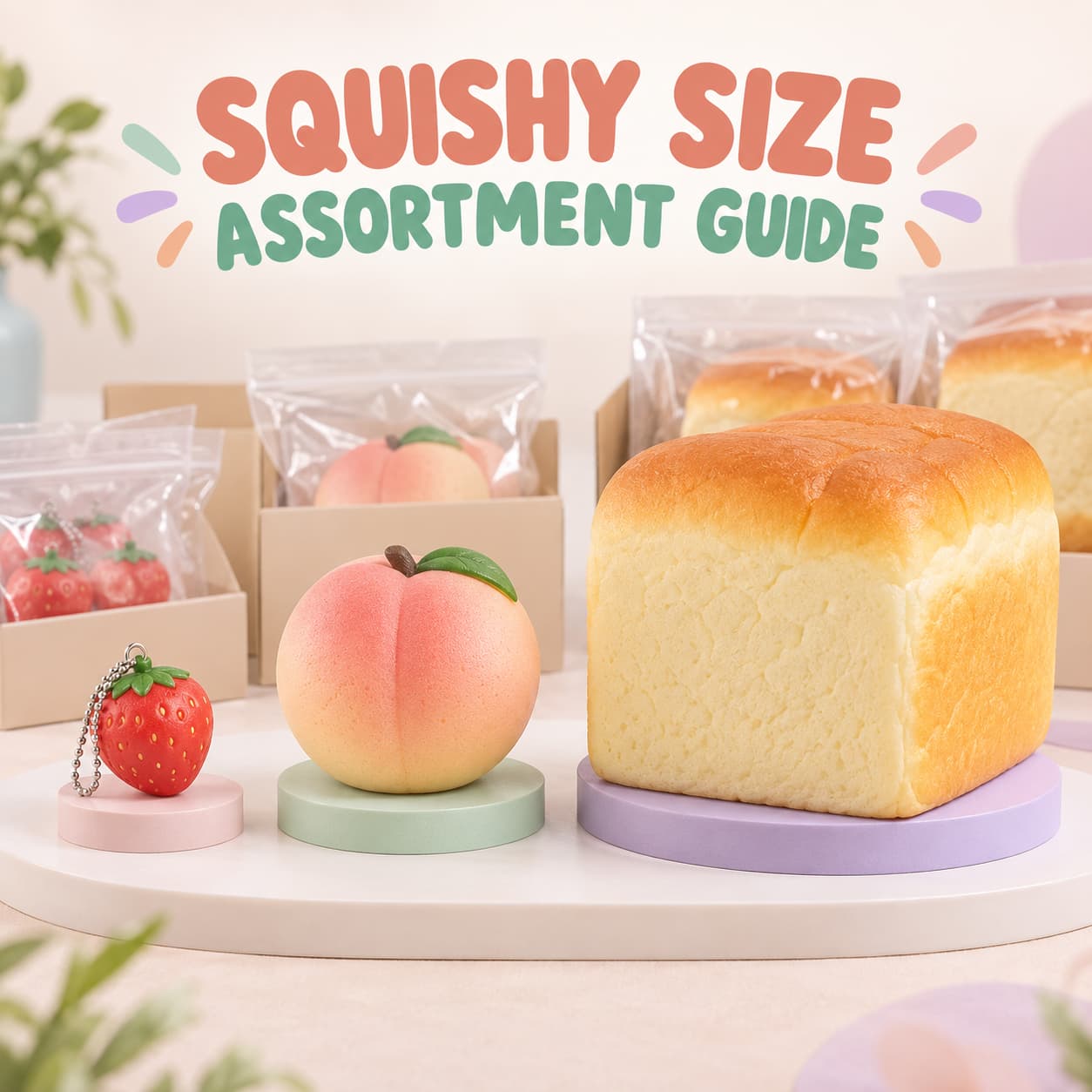
Size changes almost every commercial decision in a squishy toy program. A mini fruit can work as a keychain, capsule item or checkout add-on. A palm-size animal may fit a standard gift shelf and feel easy to handle. A jumbo bread or dessert shape can become the visual anchor of a display, but it also uses more package and carton space. For wholesale buyers, choosing sizes is therefore not just a matter of personal preference.
This guide explains how to plan a squishy toy size assortment for wholesale without relying on universal size labels. It connects product dimensions to retail role, squeeze feel, packaging, carton planning, ecommerce presentation and reorder strategy. Exact material, weight, minimum order, price and lead time remain product-specific confirmation items in the supplier’s current quotation.
Why size planning matters more in 2026
Public 2026 retail data shows strong momentum for squishy and sensory products. Circana reported triple-digit growth for squishy toys through April in both dollars and units, while wholesale coverage from Faire described demand spreading beyond traditional toy stores into convenience, pharmacy, grocery and other independent retail channels. These signals do not guarantee that every size will sell, but they make assortment discipline more important: different channels need different shelf footprints, price architecture and replenishment plans.
Market listings also show clear demand for both compact collectibles and jumbo novelty products. Food shapes such as strawberries, buns, toast, butter blocks and dumplings remain easy to recognize at different scales. Buyers can use that familiarity, but they should avoid copying another company’s branded form, character or packaging.
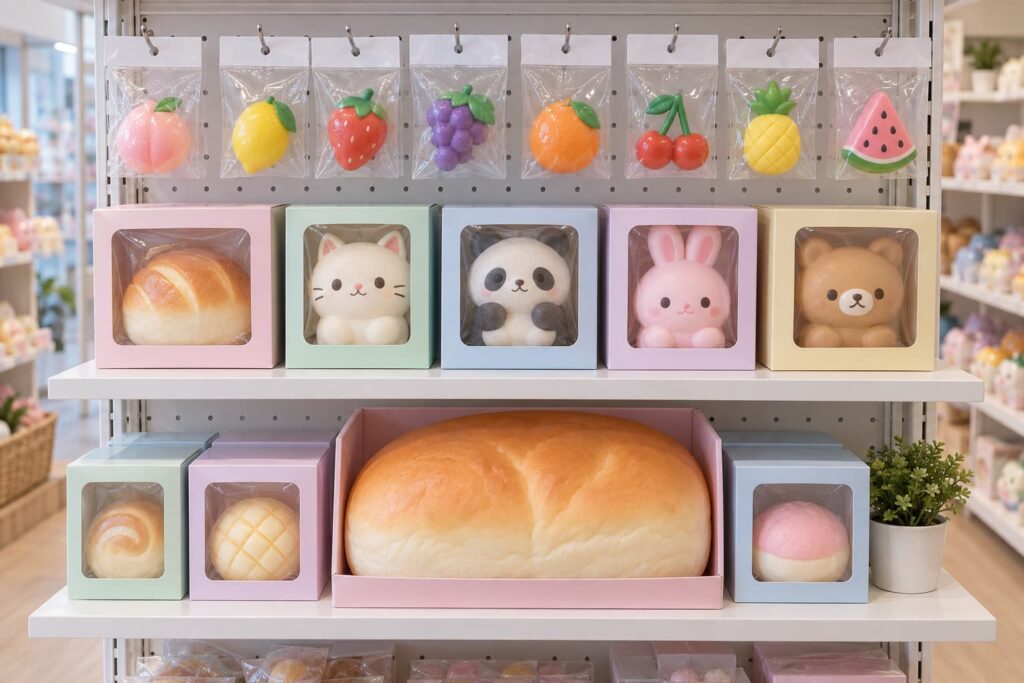
– 描述:AI生成的同款桃子PU捏捏乐三尺寸对照,配无数字尺和中性手模,仅表现比例,不声称具体尺寸。
Do not treat “mini,” “regular” and “jumbo” as specifications
Size names are useful for merchandising discussions, but they are not precise purchase specifications. One supplier’s mini may be another supplier’s small. “Jumbo” can describe any product that looks oversized relative to a standard range. A quotation and approval sample should use actual dimensions, product weight where relevant and a clearly identified physical reference.
For every SKU, record:
- overall height, width and depth;
- the orientation used for those measurements;
- material and intended squeeze behavior;
- packaging dimensions and product position;
- units per inner pack, display and master carton;
- the sales channel and retail role;
- approved sample code and artwork revision.
The same nominal height can hide very different volumes. A narrow banana, a round peach and a thick bread block may all be described with one similar dimension, yet require different material quantities and packages. Always review three dimensions and the complete shape.
Mini squishy toys: use them for assortment depth
Mini formats can support keychains, blind bags, capsule programs, party favors, checkout displays and mixed online bundles. Their small footprint lets a retailer offer more designs in limited space. A fruit series, for example, can present several colors and shapes on one peg display.
Small size does not remove product-development questions. Fine facial details may need simplification. Thin leaves, ears or attachments can become proportionally delicate. A logo that looks clear on a render may be too small for the chosen decoration method. The package must also provide enough room for required information and avoid making the product difficult to see.
Mini-size buyer checks
- Can the customer understand the shape at normal viewing distance?
- Are molded details thick and clear enough for the selected process?
- Is the printed logo or face legible on the actual curved surface?
- Does any keychain, cord or accessory require separate review?
- Does the retail pack provide appropriate visibility and labeling space?
- Can the assortment be picked and reordered accurately by SKU?
A mini program often depends on variety. Before launching many variants, decide which characteristics create a genuine SKU difference—shape, color, scent, face or package—and which changes only add complexity. A smaller first assortment can be easier to sample, inspect and replenish.
Palm-size squishies: build the core range
A palm-size product often creates a useful balance between tactile experience, visual detail, packaging footprint and ecommerce presentation. It can fit individual window boxes, clear bags, countertop displays and gift bundles without automatically becoming a large-format shipping item.
This tier is often a practical place to build the core collection. One or two recognizable food shapes can sit beside animal or character designs, while color and surface finish create variety. Buyers should still confirm the actual hand feel. A thick round form and a flat slice may compress and recover differently even when both fit in one hand.
Palm-size buyer checks
- Does the product fit the intended hand position and squeeze action?
- Is the front view visible inside the proposed package?
- Can the package stand, hang or sit in the chosen display?
- Are the design details large enough for repeatable decoration?
- Does the item support the target bundle or gift-set format?
- Will the master carton remain practical for storage and replenishment?
Use an approved physical sample rather than a screen image to confirm “palm-size.” Different buyer team members may interpret the term differently. A photo beside a ruler helps communication, but the coded sample should remain the production reference.
Jumbo squishy toys: plan for visibility and volume
Jumbo products can create a strong shelf or window statement. Current wholesale listings feature oversized food and fruit shapes because their scale makes a familiar object feel novel and easy to film for social content. The opportunity is visual impact; the trade-off is greater use of package, shelf, storage and freight volume.
A jumbo item should have a defined retail role. It may act as a hero product above a core range, a gift item, an ecommerce feature SKU or a display-led novelty. If it is simply a larger copy of every design in the assortment, the buyer may create too many bulky SKUs without learning which one earns the space.
Jumbo-size buyer checks
- Is the item intended for one-hand or two-hand squeezing?
- Does the shape recover evenly across thick and thin areas?
- How will the product be protected from long-term compression?
- Can the retail package show the scale without hiding key features?
- How many packed units fit into the master carton?
- Can the retailer store, display and replenish the carton conveniently?
- Does the ecommerce page communicate size clearly enough to reduce surprises?
Do not assume that light foam makes carton volume irrelevant. Freight quotations can depend on dimensional as well as actual weight, depending on the route and carrier. Ask for the packed product, inner and master-carton dimensions before comparing landed-cost scenarios.
Assign each size a retail job
A strong size ladder gives buyers a reason to stock more than one tier. The three formats should not compete for the same exact shelf role.
- Mini: variety, collectability, capsule, keychain, bundle or checkout role.
- Palm-size: core tactile SKU, gift shelf, standard individual package or online multi-buy.
- Jumbo: display anchor, premium-feeling gift, hero product or social-content feature.
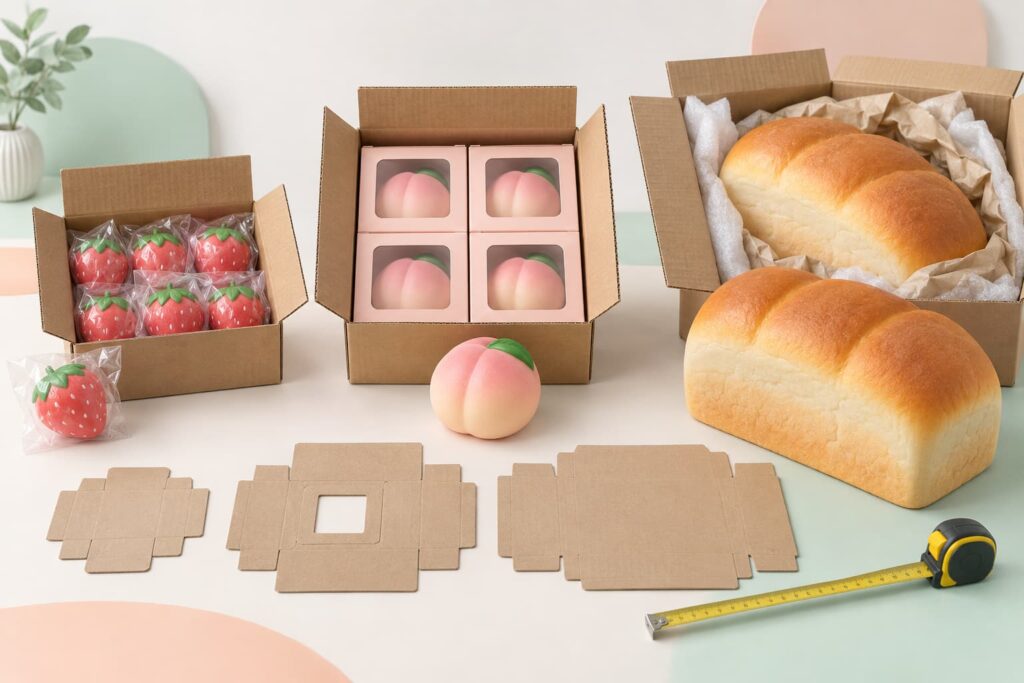
Retail roles should then guide shape selection. Mini fruit pieces can create a colorful hanging assortment. Palm-size animals or breads can fill the core window-box row. One jumbo bun, toast or dessert can anchor the lower shelf. This structure is easier to understand than placing every shape in every size.
Keep the visual language consistent across sizes
A coordinated collection does not require identical products. Use shared color families, facial style, surface finish, packaging graphics or scent strategy to connect the range. When scaling one design, ask whether molded and printed details should scale proportionally or be redrawn for clarity. A face that works on a jumbo item may look crowded on the mini version.
For private-label programs, create a size-specific artwork sheet. State the logo dimensions and location for each SKU rather than applying one file at an automatic percentage. Review curved surfaces and packaging windows on actual samples. Dongyu Toys’ logo and branding guide can support the brand side of that decision, while this article remains focused on size architecture.
Packaging changes with the size tier
Packaging should protect the item, show the intended front view, provide required information and suit the retailer’s fixture. A mini item may use a clear hanging bag or small carton. A palm-size item can work in a window box or counter display. A jumbo product may need a larger bag, tray or protective carton that does not keep the foam compressed.
Approve package fit using the final product sample. Review clearance around leaves, ears and other projecting details; the way the product sits after transport; window visibility; surface rubbing; and the opening experience. A package that technically closes may still make the item lean, hide the face or create pressure marks.
Compare cartons before comparing unit price
Unit price alone cannot show the commercial effect of size. Ask for a packing specification that connects each SKU to its retail pack and master carton. A useful comparison includes product dimensions, packed dimensions, units per carton, carton dimensions and gross/net weight where the supplier can confirm them.
Then compare scenarios at the assortment level:
- How many retail units fit in the available shelf or peg space?
- How much back-room storage does one master carton use?
- Can store staff replenish the fixture without mixed-SKU confusion?
- Does the ecommerce bundle create an efficient shipping package?
- Is the jumbo item profitable after realistic freight and fulfillment costs?
- Can a small test order reveal demand without creating an unbalanced assortment?
Do not publish a landed-cost claim until the current freight terms, destination, carton data and order configuration are known. The same product can have a different outcome under different routes and seasons.
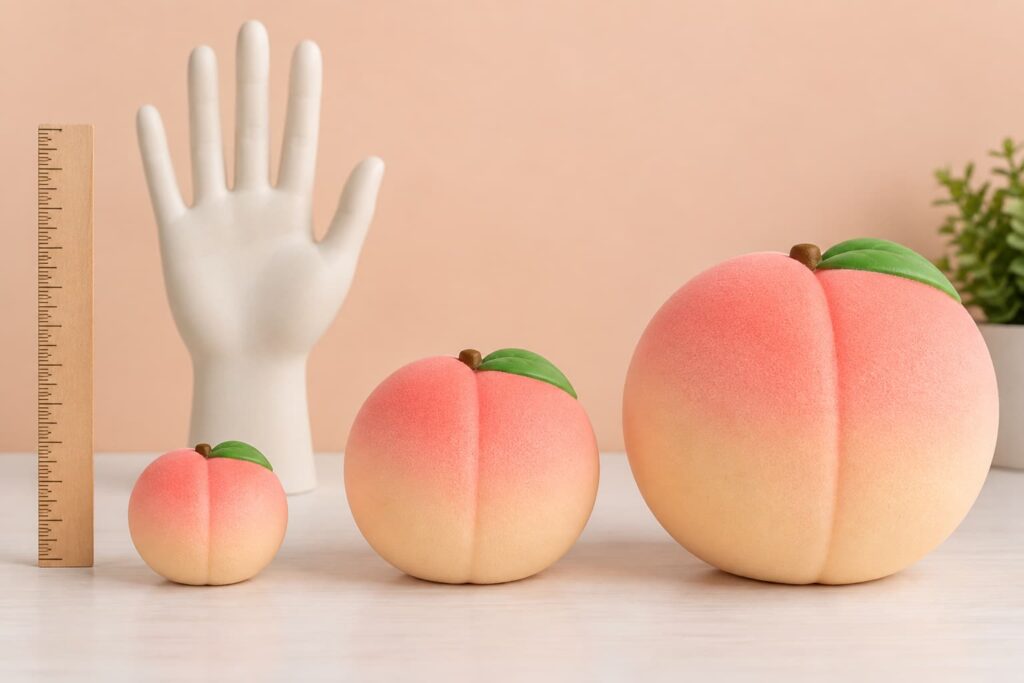
– 描述:AI生成的批发装箱评审图,展示迷你草莓袋装、掌心桃子盒装和Jumbo面包保护包装的空间差异,不含虚构装箱数据。
Plan a test assortment and reorder logic
A first order should be designed to teach the buyer something. Instead of dividing quantity evenly across every size and shape, identify the core hypothesis. Are mini fruits expected to drive multi-unit purchases? Is the palm-size animal the dependable gift SKU? Will a jumbo bread create display traffic and attach sales?
Track sell-through, reorder timing, returns, damage, customer questions and channel differences by SKU. If a jumbo item attracts attention but turns slowly, it may still have merchandising value, but that role should be deliberate. If mini items sell quickly but create picking errors, packaging and SKU identification may need improvement before the assortment expands.
What to include in a size-focused RFQ
- product sketch or design file for each shape;
- target height, width and depth, plus acceptable design discussion;
- material and squeeze-feel reference;
- size tier and intended retail role;
- logo, decoration, scent and surface-finish requirements;
- individual package and display format;
- estimated quantity by SKU and size;
- destination market, age grading and documentation needs;
- requested packed-unit and master-carton information;
- target launch window, subject to supplier feasibility confirmation.
Ask the manufacturer to quote the exact configuration rather than applying a generic mini, standard or jumbo price. Size interacts with material use, mold development, decoration coverage, packaging and packing efficiency.
Frequently asked questions
What is the best squishy size for wholesale?
There is no universal best size. The right choice depends on channel, retail role, target price structure, desired squeeze experience, package and carton plan. Use actual dimensions and samples rather than size labels alone.
Are mini squishies always cheaper to ship?
Smaller items can use less space, but the real result depends on retail packaging, units per carton, order mix, carrier rules and destination. Compare confirmed packed-carton data.
Why are jumbo food squishies popular in displays?
Oversized familiar shapes are easy to recognize and can create strong visual impact. Retail demand still needs to be tested, and the buyer should evaluate space, packaging and landed cost.
Can one design be offered in three sizes?
It may be possible, but each size should be reviewed for molded-detail clarity, printed artwork, squeeze behavior and package fit. Simple proportional scaling may not produce the best result.
When should carton planning begin?
Begin before final size approval. The carton plan can reveal storage, freight or package-efficiency issues while dimensions are still easier to discuss.
Build a quote-ready squishy size assortment
Choose size by job: minis for variety and compact fixtures, palm-size products for the core range, and jumbo items for deliberate display impact. Specify actual dimensions, review physical samples, approve the retail pack, and compare master-carton data before deciding the final mix.
Explore Dongyu Toys’ squishy toy categories and custom service options. To discuss a mini, palm-size or jumbo program, send your design, target dimensions, quantity by SKU, market and packaging idea. The team can review the project and confirm size-specific feasibility without relying on unverified generic assumptions.